Mixing Leather and Wood for a Timeless Interior
Leather and wood have been used together in furniture for centuries, and for good reason. Mixing leather and wood in an interior creates a harmony that few other material combinations can match. Both are natural. Both improve with age. Both carry the character of the living world, with their own grain, their own texture, their own warmth.
More than any other pairing in interiors, leather and wood feel grounded. Not trend-led. Not curated for a moment. Genuinely enduring in a way that suits South African homes particularly well, where the emphasis has always been on materials that last and rooms that feel lived in.
At Incanda, the relationship between these two materials runs through the range. Many of the pieces below combine both in a single design. Others carry one with enough character that the other becomes the natural companion. Here is how to bring them together across the home.
Why Leather and Wood Belong Together
The answer is simpler than most interior guides make it. Leather and wood are both natural, organic materials with a visible grain. When you put them in the same room, they speak the same language.
Both age visibly and honestly. Full-grain leather develops a patina. Solid oak deepens in tone over the years. Rather than wearing out, they acquire character. This shared quality means that a leather and wood interior doesn’t fade: it improves with the life lived around it.
There is also a tonal compatibility that makes the pairing easy to work with. The warm amber of oak, the honey of Butterscotch leather, the deep earthiness of a Ginger hide, the cool richness of Olive: these tones occupy the same warm, natural register and rarely conflict. They complement each other and have always sat naturally, side by side.
A few practical reasons the pairing works so well:
- Both materials are tactile: they reward touch and close inspection in ways that synthetic alternatives never do.
- Leather softens the solidity of wood; wood grounds the suppleness of leather.
- The combination suits both contemporary and traditional interiors, making it one of the most versatile choices for a South African home.
- Full-grain leather and quality solid wood are both long-term investments. Choosing them together is a commitment to permanence rather than replacement.
The Living Room: Where the Pairing Announces Itself
The living room is where leather and wood make their clearest statement, and it’s the most natural place to start.
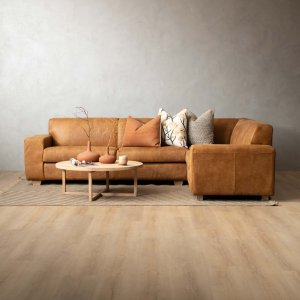
A full-grain leather couch is the foundation. Place it on a solid wood floor or beside a timber coffee table and the pairing begins without effort. The key is in the quality of the leather. Full-grain hides develop a surface that improves over time, and the oak legs of a well-made couch bring the natural material story all the way to the ground.
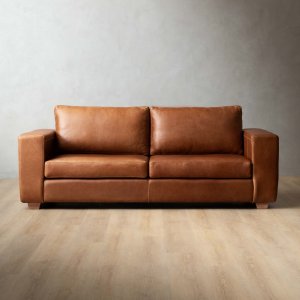
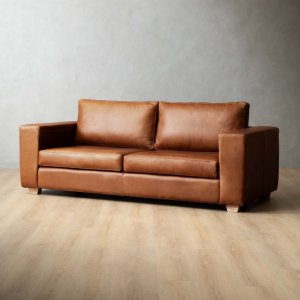
The Westerman 3-Seater Leather Couch in Butterscotch does this in a single piece. Upholstered in full-grain leather with broad armrests and solid oak legs, it demonstrates the pairing without needing anything else in the room to make the point. The Butterscotch hide has a warmth that works with light-toned oak and equally with darker timber pieces nearby.
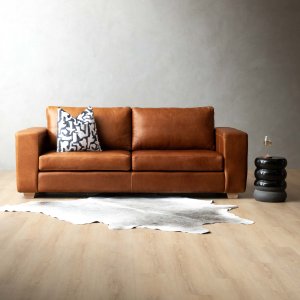
Lean into the natural tones. A leather couch against a wooden floor, beside a solid wood side table, under the kind of natural light that South African living rooms attract: this is the combination at its most confident.
The Dining Room: A Room Built for the Combination
The dining room may be where leather and wood feel most at home together. The solid table, the leather chair, the bench with its woven seat: each element does its part.
The table as the anchor
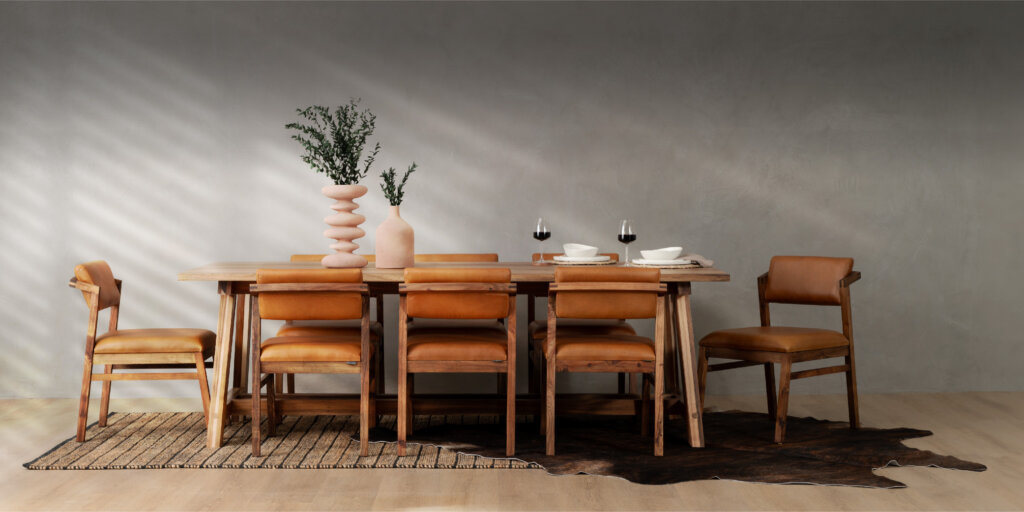
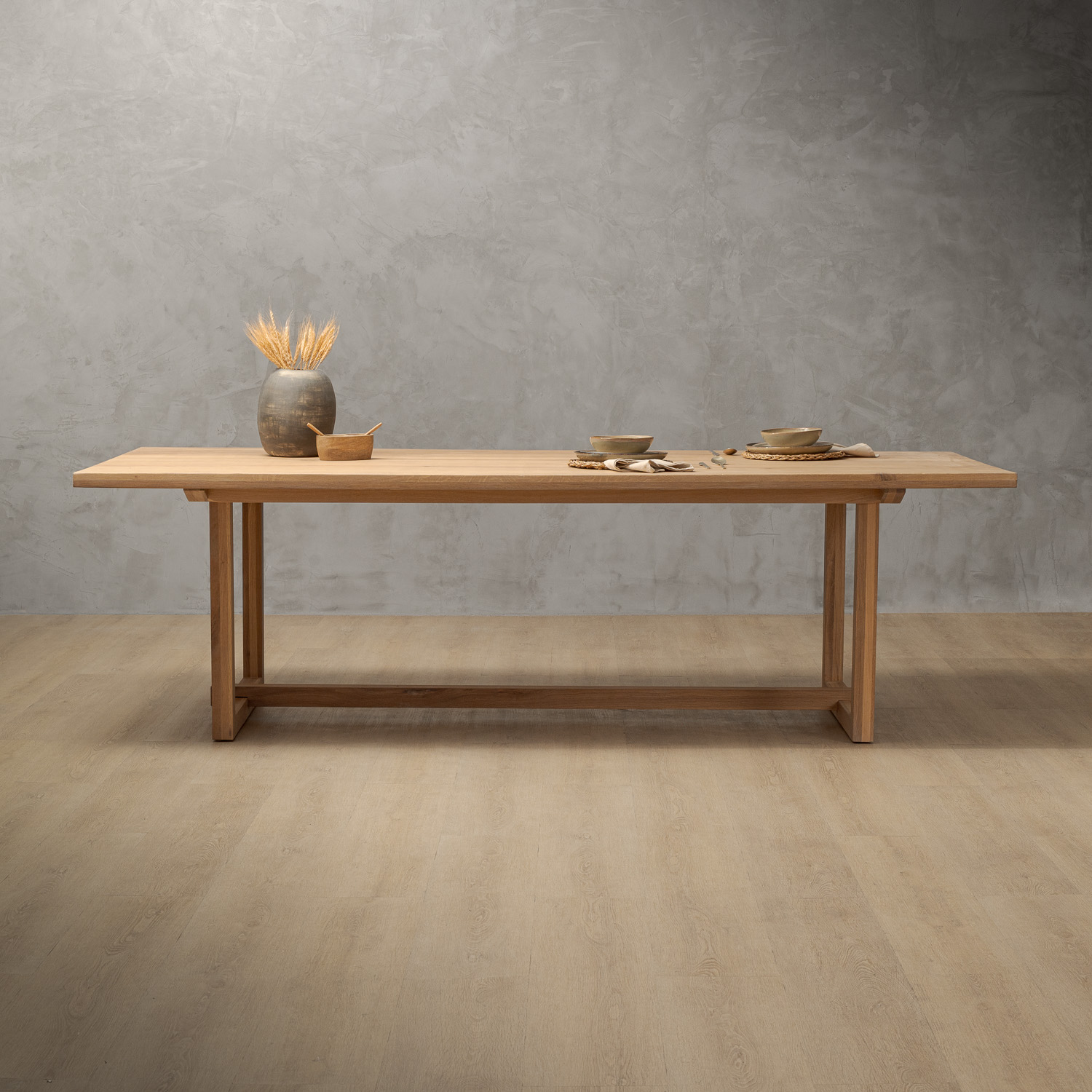
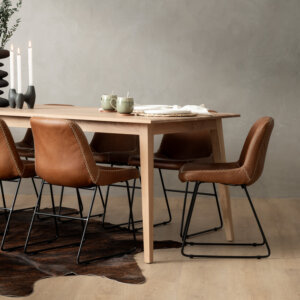
Start with solid wood. A dining table built from genuine oak brings a presence and warmth that sets the tone for everything around it. The Paternoster Dining Table in Oak is a considered centrepiece for a spacious dining room: refined proportions, honest solid oak construction, and a surface that will carry the memory of every meal served on it for years.
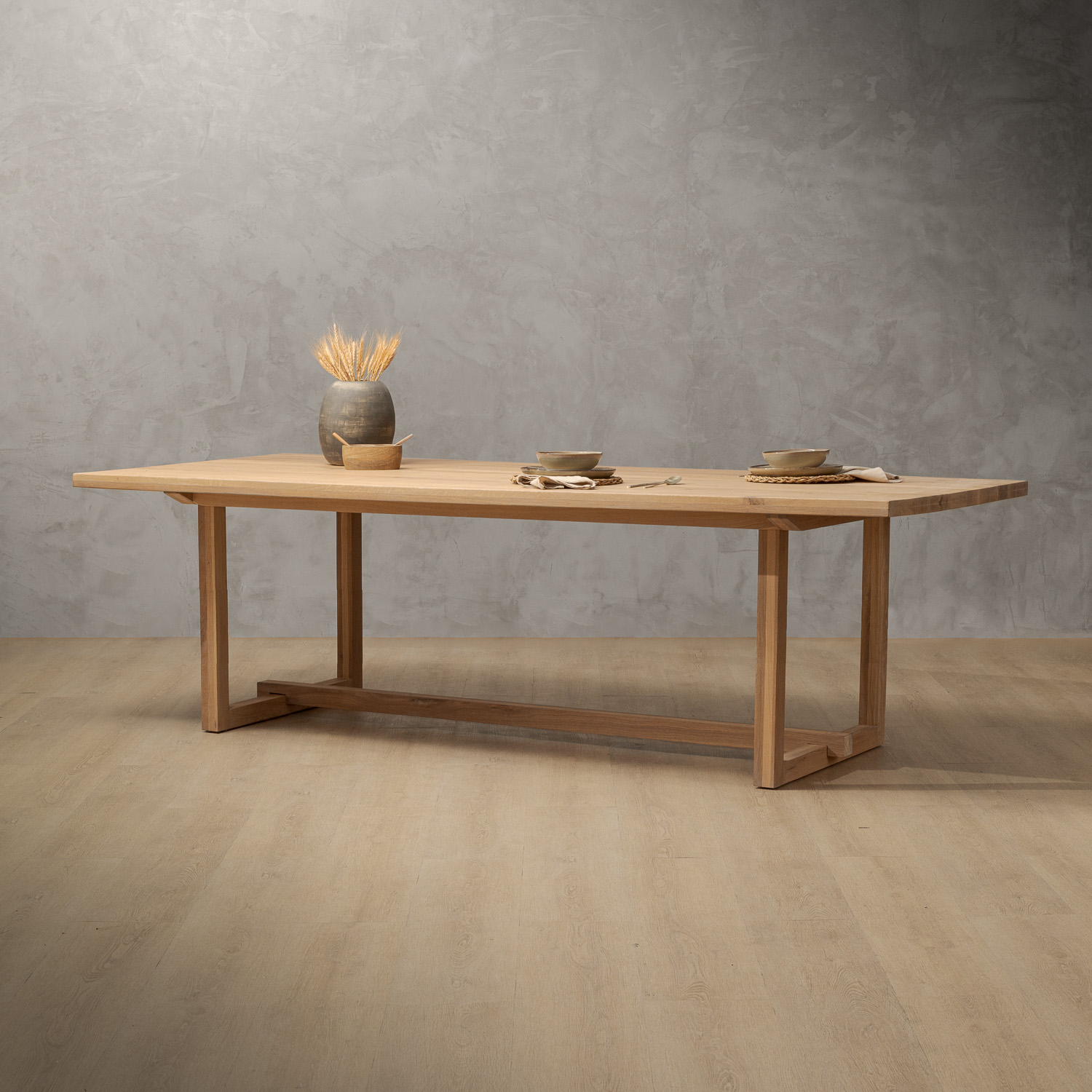
Around a table like this, full-grain leather chairs find their natural context. They bring softness and texture to the structure and weight of the oak.
The chairs: where leather meets wood at the table
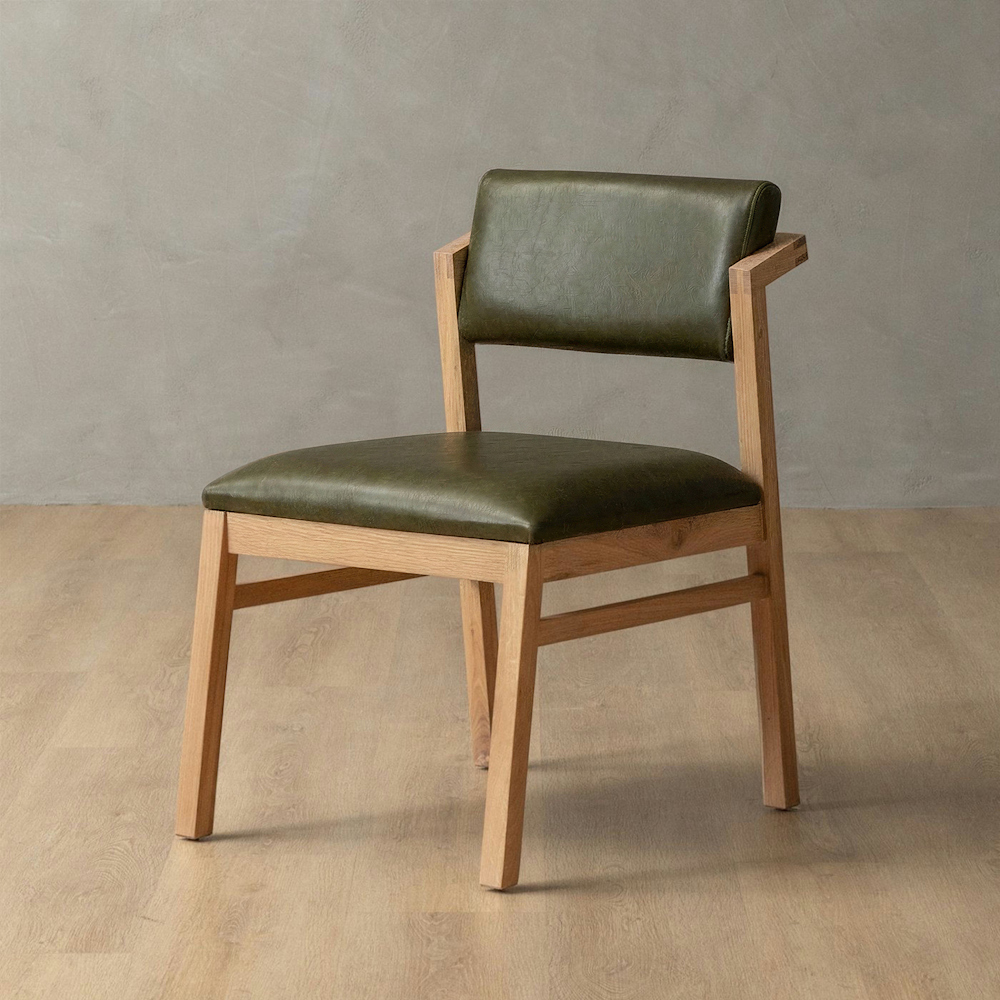
The Jozi Leather Dining Chair in Oak and Olive is one of the cleaner expressions of this pairing in the Incanda range. Full-grain leather upholstery in a muted, earthy Olive sits on a solid oak frame with a clean-lined armless design. It tucks under the table with ease. The leather and wood are genuinely complementary: same warmth, different textures.
The server: leather as detail
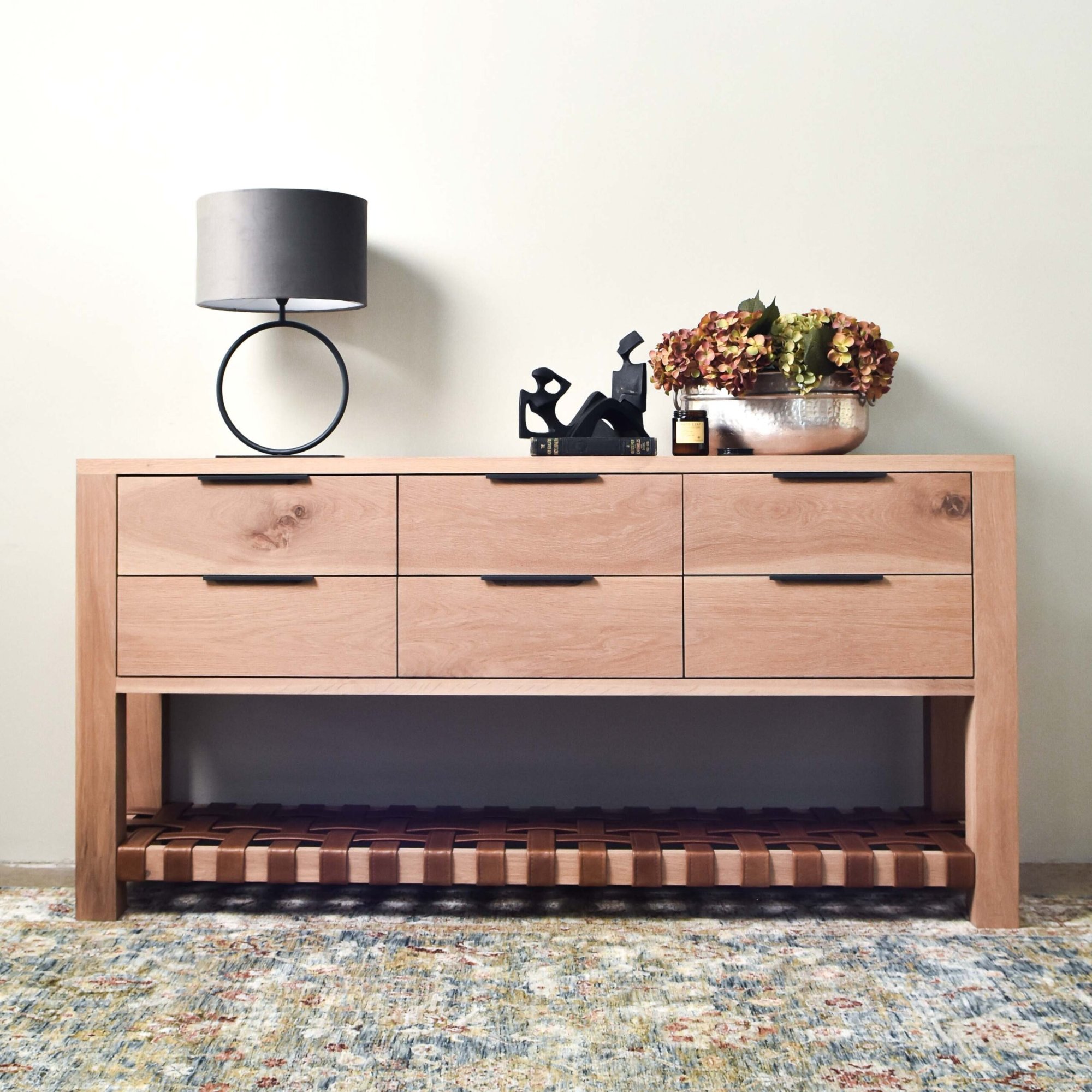
The Large Klein Karoo Server in Oak takes the pairing a step further. Solid oak forms the body; full-grain leather in Ginger runs through the drawer supports and lower shelf, adding texture against the grain of the timber. Stone-black steel grips complete it. Three materials, one considered piece. The Klein Karoo Server is the kind of sideboard that draws attention in a dining room and holds it.
The bench: a South African material story
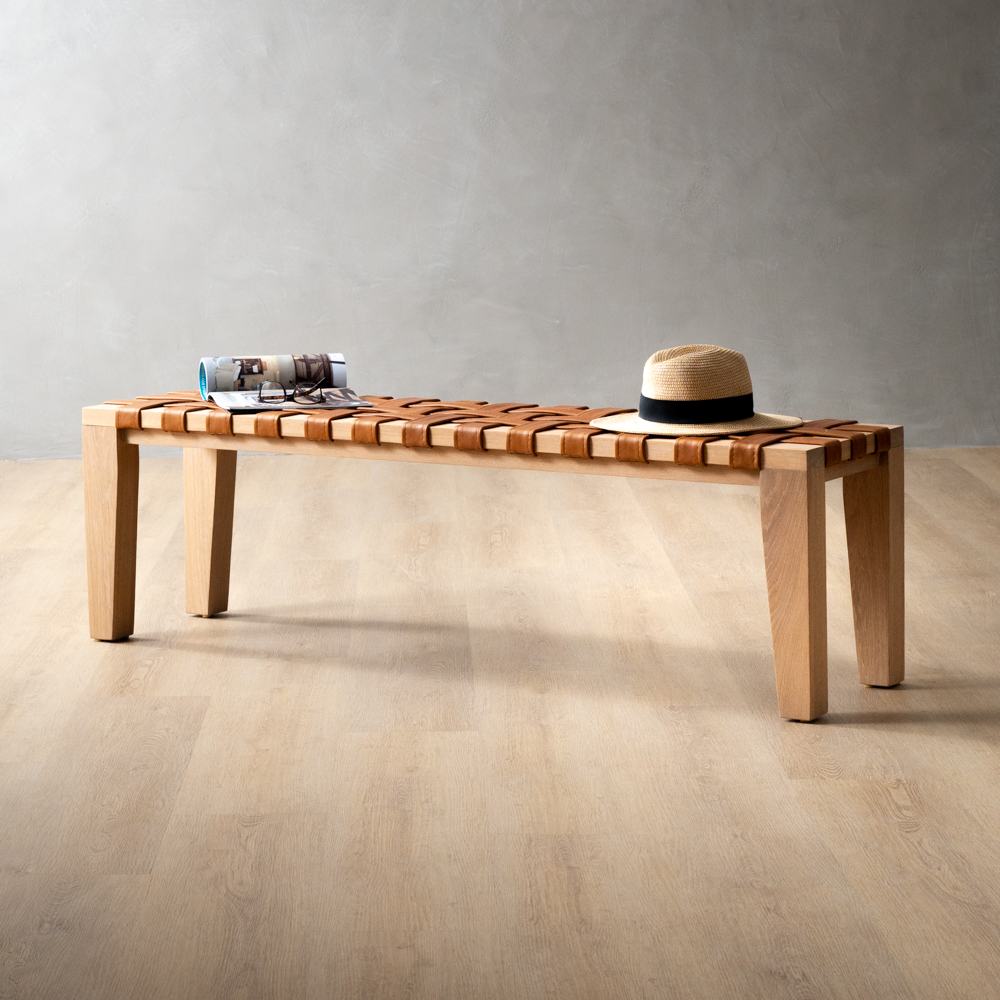
Few pieces combine leather and wood with as much craft heritage as the Riempie Bench. The riempie tradition is as South African as the Karoo itself: leather strips woven by hand into a seat of genuine warmth and durability. The Riempie Bench carries full-grain leather handwoven across a solid oak frame, and the result is a bench that brings craft character to any space it occupies. It works in the dining room, the entrance, the bedroom end of a hallway.
The bar stool: the detail that ties it together
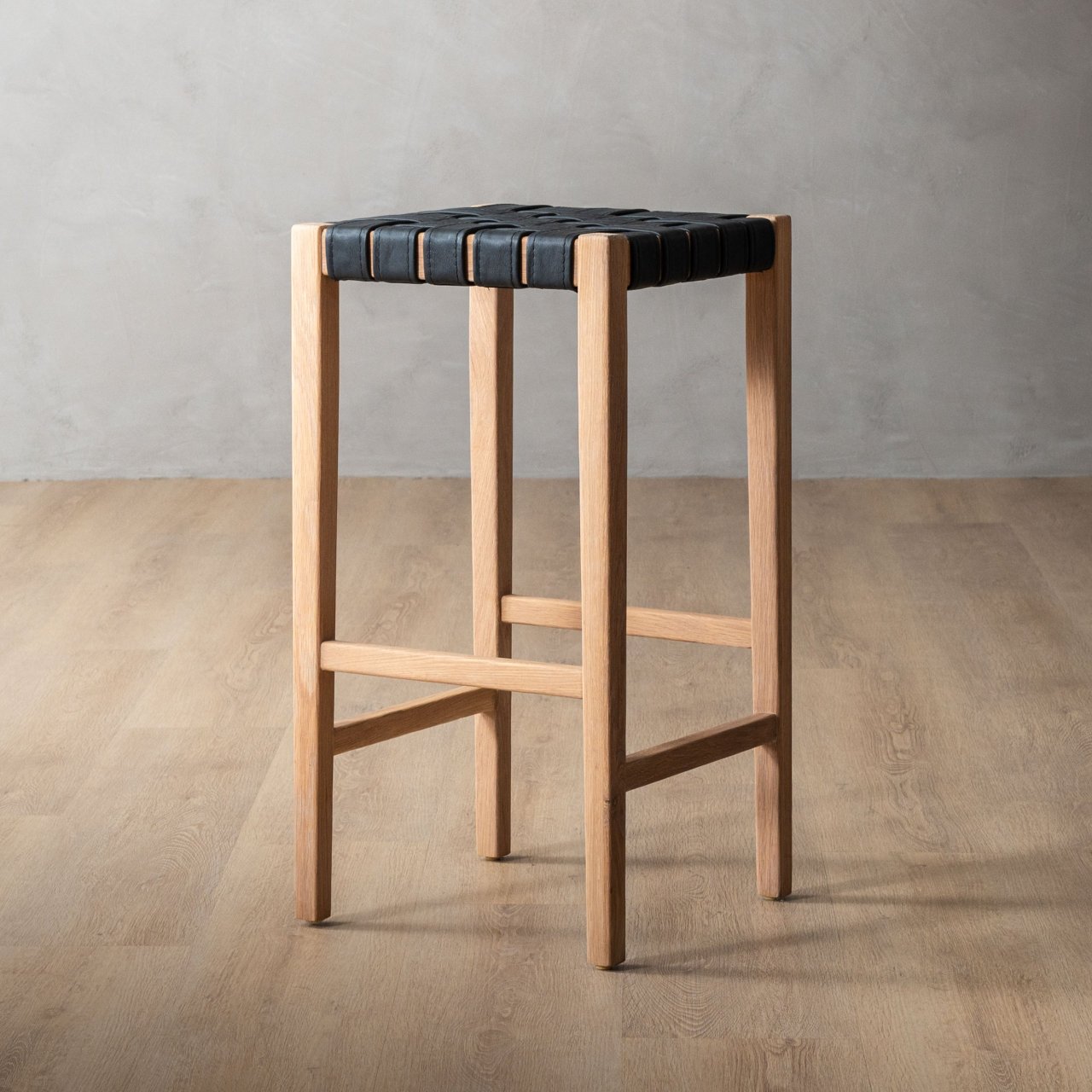
At a kitchen counter or bar setup, the Cederberg Tall Leather Bar Stool in Oak brings the same pairing in a lighter, more casual form. Full-grain leather seat, solid oak frame, and clean lines that work alongside both rustic and contemporary finishes. It’s the kind of piece that looks considered without drawing attention to itself.
The Bedroom: Where the Pairing Becomes Intimate
In the bedroom, leather and wood take on a quieter, more personal quality. The goal here is warmth rather than statement: the kind of room you settle into rather than notice.
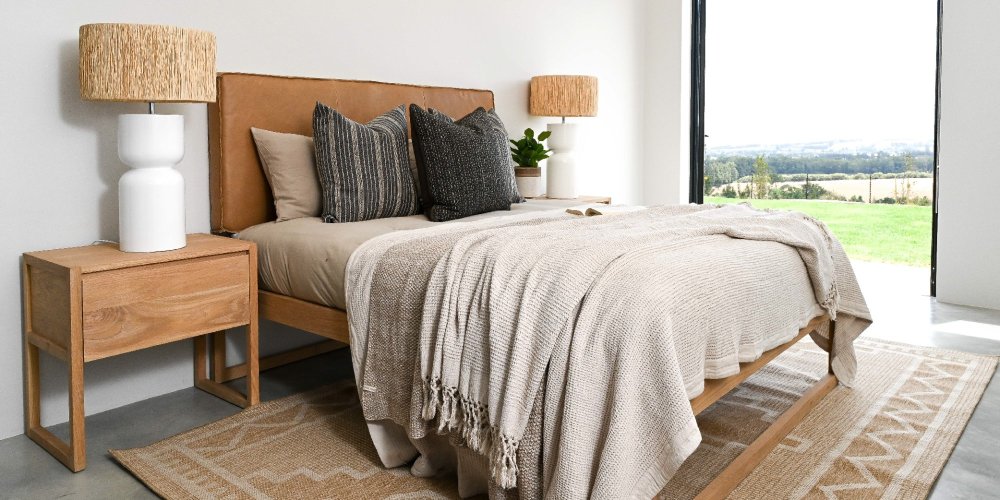
The Kimberley Swazi Bed brings the pairing together in a single product. The Kimberley Headboard is upholstered in full-grain leather in a warm Ginger finish, with classic panel detailing and a sleek wall-mounted design that brings calm and understated elegance to the room. The Swazi Bed Base below it is crafted from solid oak in an Oak Smoke finish, with a minimalist structure that suits any décor and lets the headboard do the talking.
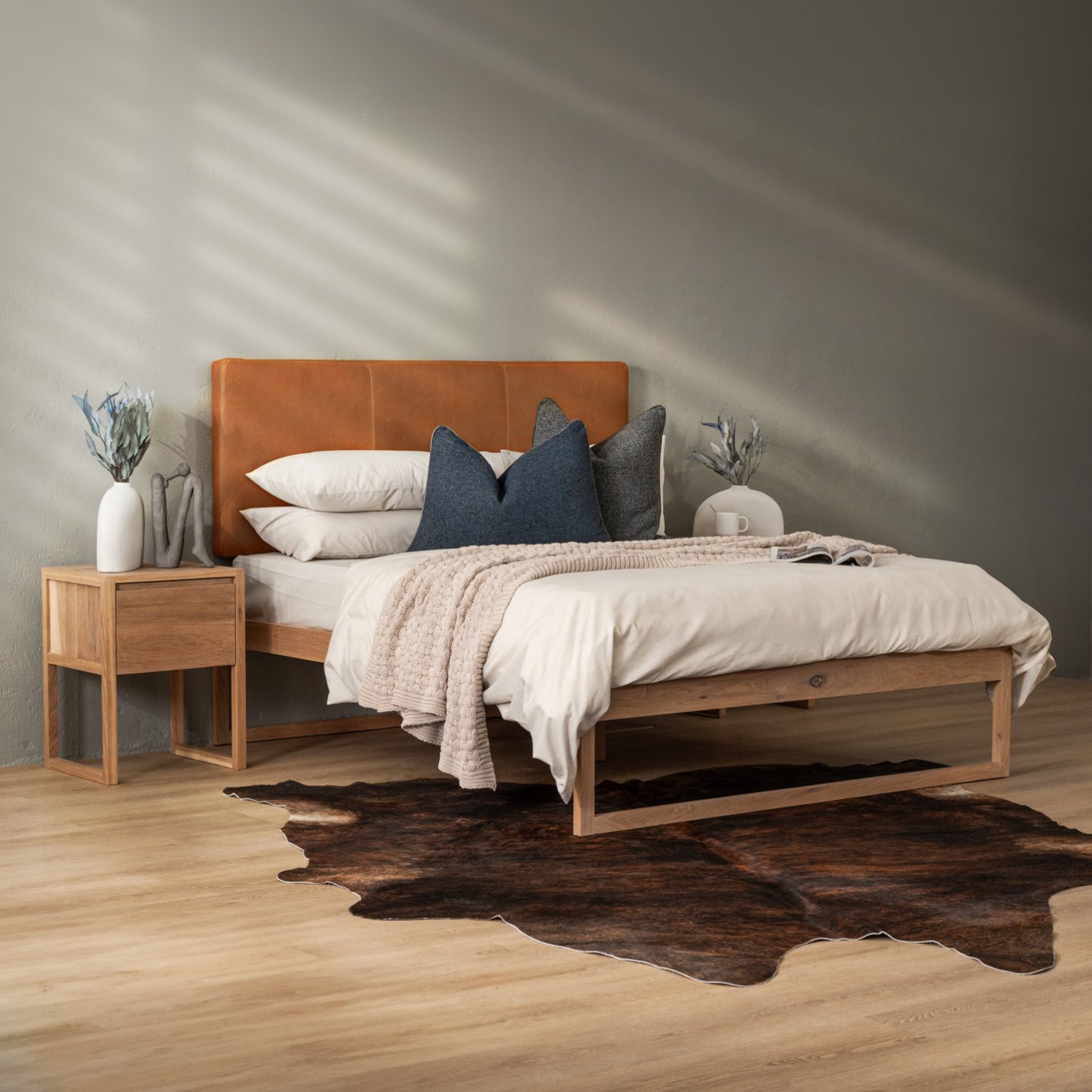
Together, they demonstrate the quieter side of the leather and wood pairing. There is no drama here: just two honest natural materials, each doing what it does best. The leather brings warmth and a living surface to the headboard. The solid oak brings structure and durability to the base. Both will look better in ten years than they do today.
Pair this with timber flooring or a warm-toned rug to carry the material story through the room.
Getting the Balance Right
Mixing leather and wood doesn’t require a formula, but a few principles help the room hold together.
Match tones, not shades
Full-grain leather comes in a wide range of finishes, from the warm honey of Butterscotch to the earthy depth of Ginger and the cool richness of Olive. None of these need to match the exact colour of the wood. What matters is that they occupy the same warmth register. A light oak pairs naturally with Butterscotch or Ginger. A darker timber finds its companion in Olive or Black leather.




Let one material lead
In a living room, leather leads and wood supports: the couch sets the tone, the timber legs and side tables anchor it. In a dining room, wood often leads: the solid table is the anchor, and leather chairs and leather-accented pieces fill in around it. Decide which material defines the room and let the other reinforce it.
Use handcrafted pieces wherever possible
The leather and wood pairing earns its character from the quality of the materials. A full-grain hide has a surface life that bonded leather never develops. Solid timber holds its form and finishes where veneers delaminate. Both of these qualities reward time in ways that only handcrafted furniture can. This is why the combination works so well in South African homes built around Incanda pieces: the material quality is genuine, and it shows over years rather than seasons..
Leather and wood have been trusted together since furniture has been made. The reason they endure is the same reason they suit South African homes: they are honest materials that tell the truth about their making, improve with use, and never look out of place.
Browse the full Incanda range online or at one of our showrooms across South Africa.