Why Solid Wood Furniture Is Worth the Investment
The case for choosing furniture built to outlast the trends, and the decades.
Some furniture is bought to fill a space. Solid wood furniture is bought to fill a home — permanently, honestly, and in a way that improves over time. In a market flooded with flat-pack veneers and engineered boards, solid wood stands apart for one simple reason: it is real.
This guide makes the case for solid wood furniture in the South African home, highlighting what makes it different, why it holds its value, and how to choose pieces that will still be worth living with long after everything else has been replaced.
1. It is built to last — properly
Solid wood is not a trend. It is the oldest building material in furniture history, and the reason it has survived this long is straightforward: it holds up. A well-made solid oak dining table does not warp, delaminate, or hollow out at the corners after a few years of use. The grain runs through the full thickness of the piece. There is no MDF core, no veneer that can bubble or peel, and no structural weakness introduced by a manufacturing shortcut.
For South African homes, where the climate shifts between hot, dry summers and cooler winters, solid wood’s natural movement is a feature, not a flaw. It breathes with the humidity, adjusting slowly and maintaining its integrity over decades. Treated and finished correctly, it does not crack or split.
Furniture built from solid wood does not fail quietly. It gives years — often decades — of warning before it needs attention. And when it does need repair, it can be sanded, refinished, or restored without replacing the piece entirely.
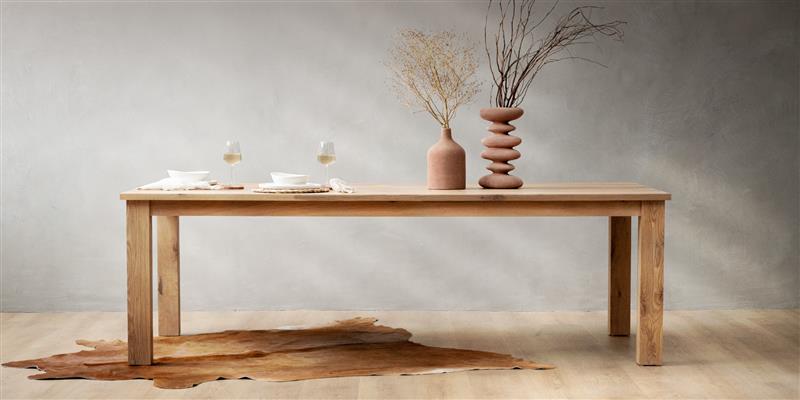
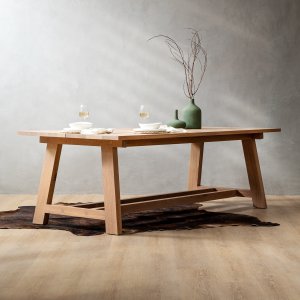
Featured: Griekwa Dining Table — Oak
The Griekwa Dining Table is crafted from solid oak with a design rooted in mid-19th century Arts and Crafts principles. Its distinctive angled legs, two foot rails for structural support, and raw grain top reflect what solid wood construction actually looks like in practice — honest, purposeful, and built to handle years of family use without losing its character.
2. It develops character over time
Most furniture gets worse with age. Solid wood furniture gets better. This is not a marketing line — it is a material fact. The surface of solid oak or teak develops a patina over years of use: a depth and warmth that no factory finish can replicate. Oils from hands, light exposure, and daily contact with the wood’s surface create a richness that only comes from time.
In practical terms, this means your furniture is increasing in character while other pieces around it are declining. A ten-year-old solid wood dining table that has been lightly cared for looks more distinguished than a new one. Its story is written into the grain.
This is especially true of reclaimed wood, where the material itself carries a history before it arrives in your home.
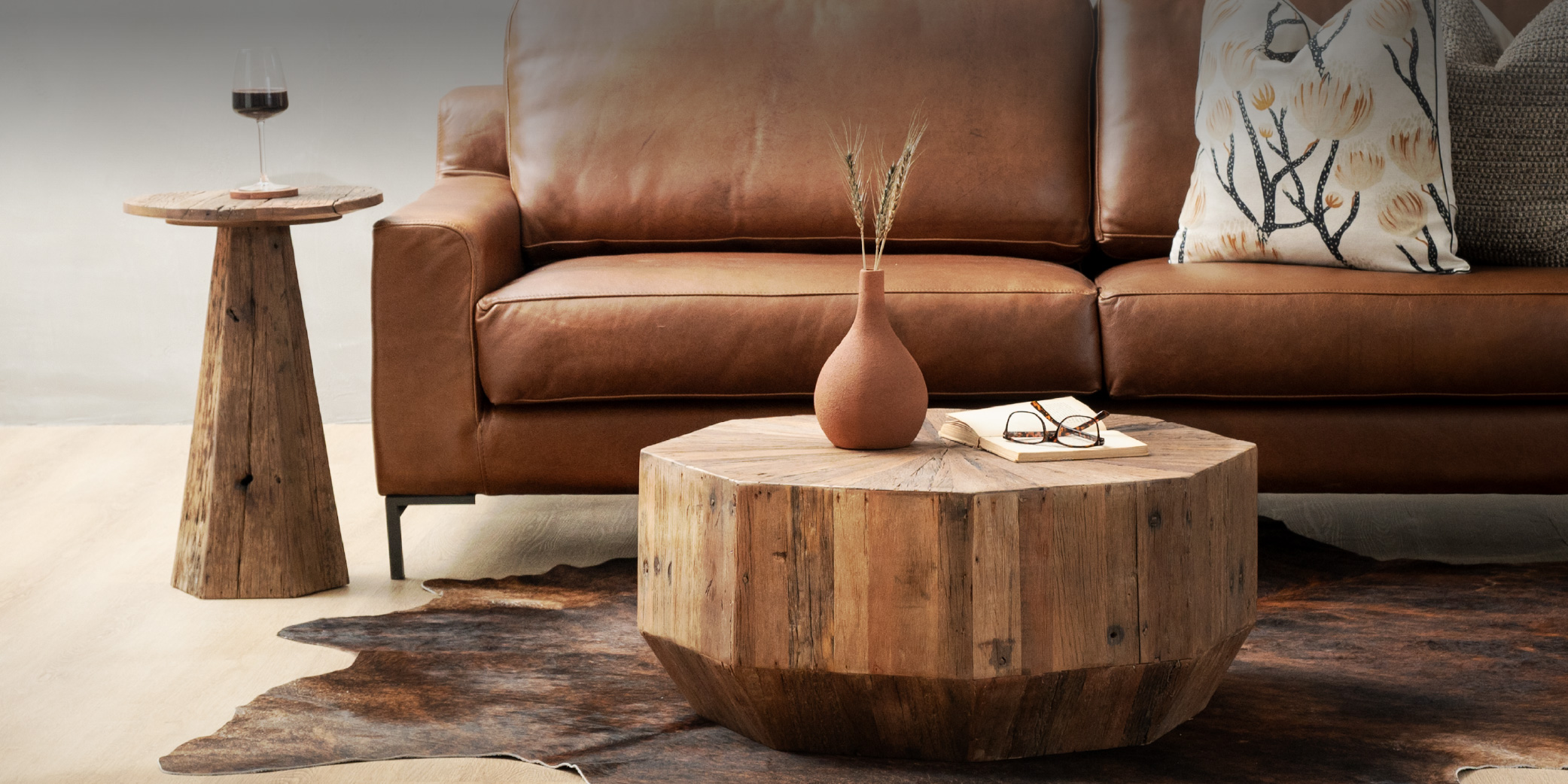
Featured: Overberg Coffee Table
Crafted from reclaimed pine and solid teak, the Overberg Coffee Table arrives already carrying the warmth and texture of a storied past. Because it is made from reclaimed wood, variations in tone, natural blemishes, and distinctive hallmarks are not imperfections — they are the point. No two Overberg tables are alike. Each one develops its own patina over time, becoming more itself with every year it spends in your lounge.
3. The dining room: where solid wood earns its keep most
The dining table is the hardest-working piece of furniture in any home. It handles daily meals, school projects, Sunday braais, and birthday gatherings. It needs to withstand heat, weight, spills, and elbows, over and over again, for years.
This is exactly where solid wood furniture makes the most sense financially. A well-chosen solid oak table that costs more upfront will still be in your home in fifteen years. An engineered-board table bought at a lower price will likely be replaced two or three times in the same period, at a higher total cost, and without any of the character.
The same logic applies to the sideboard or server alongside it. A solid wood sideboard does not just store your crockery; it anchors the room. Its proportions, its finish, and its presence are consistent over time in a way that particleboard furniture simply cannot sustain.
Featured: Namib Dining Table — Blackwood
The Namib Dining Table is crafted from solid oak with a minimalistic cross-base and a bevelled edge top. Its round form and clean lines make it equally at home in a contemporary open-plan room or a more traditional dining space — a table designed to sit in many different homes over many different years.

Featured: Bexford Sideboard — Grey Wash
A solid wood sideboard in a grey wash finish that works with a wide range of dining room tones. The Bexford offers generous enclosed storage in a piece built to carry its weight in both function and presence. Paired with the Namib or any solid wood dining table, it completes a dining room designed to last.

4. The living room: grounding the space with real wood
In the living room, solid wood does a different kind of work. It grounds the space. A solid wood TV unit or display shelf gives the room weight and permanence — a counterbalance to the softer furnishings around it.
This is particularly important in South African homes, where open-plan living puts the lounge, kitchen, and dining area in constant visual conversation. A solid wood piece in the living room carries its own and connects naturally with timber elements in adjacent areas.
The practicalities matter here too. Solid wood TV units hold up to daily use — the weight of a screen, the constant opening and closing of drawers — in a way that board-based units cannot sustain over time. The joints stay tight. The drawers continue to run smoothly. Nothing delaminates or swells.
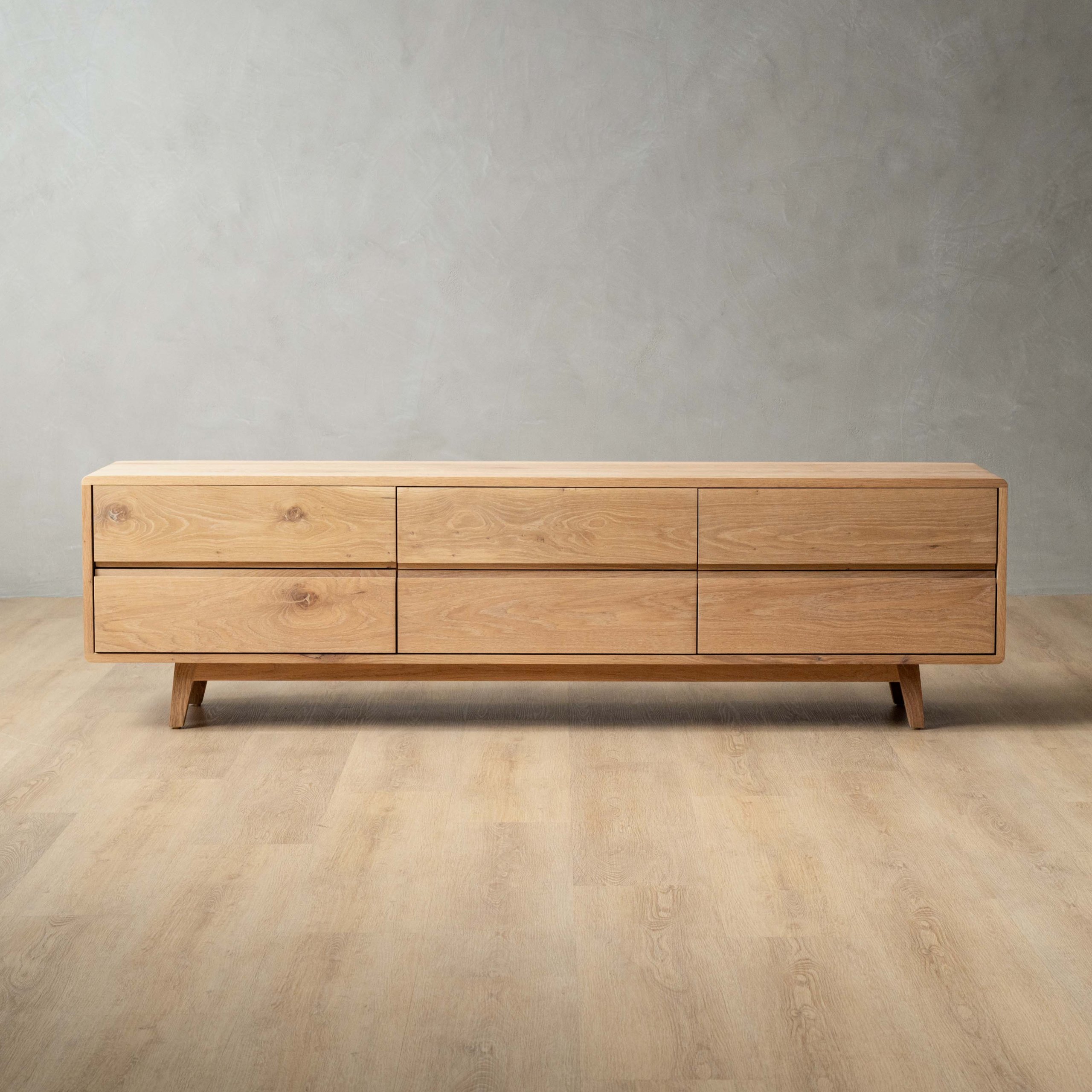
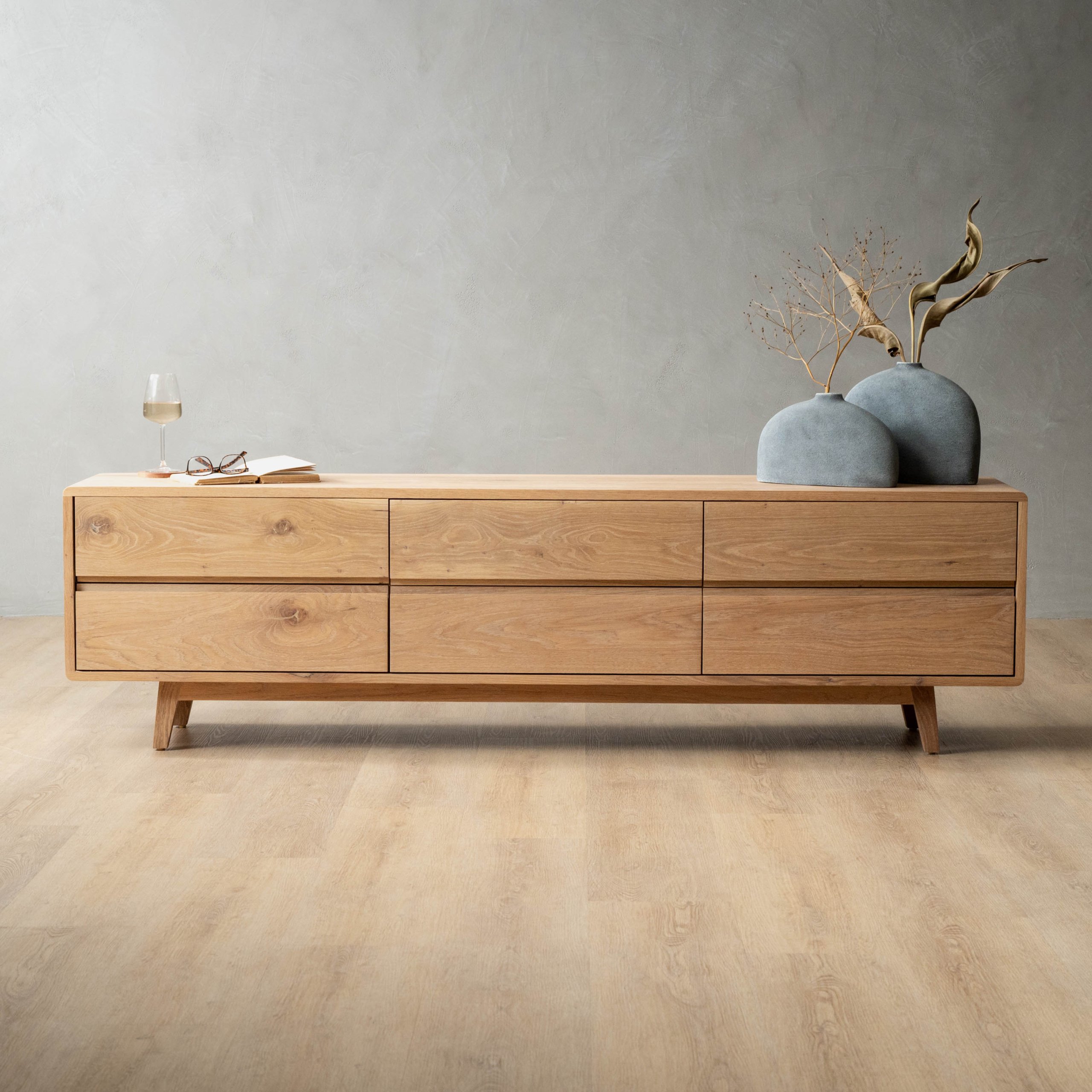
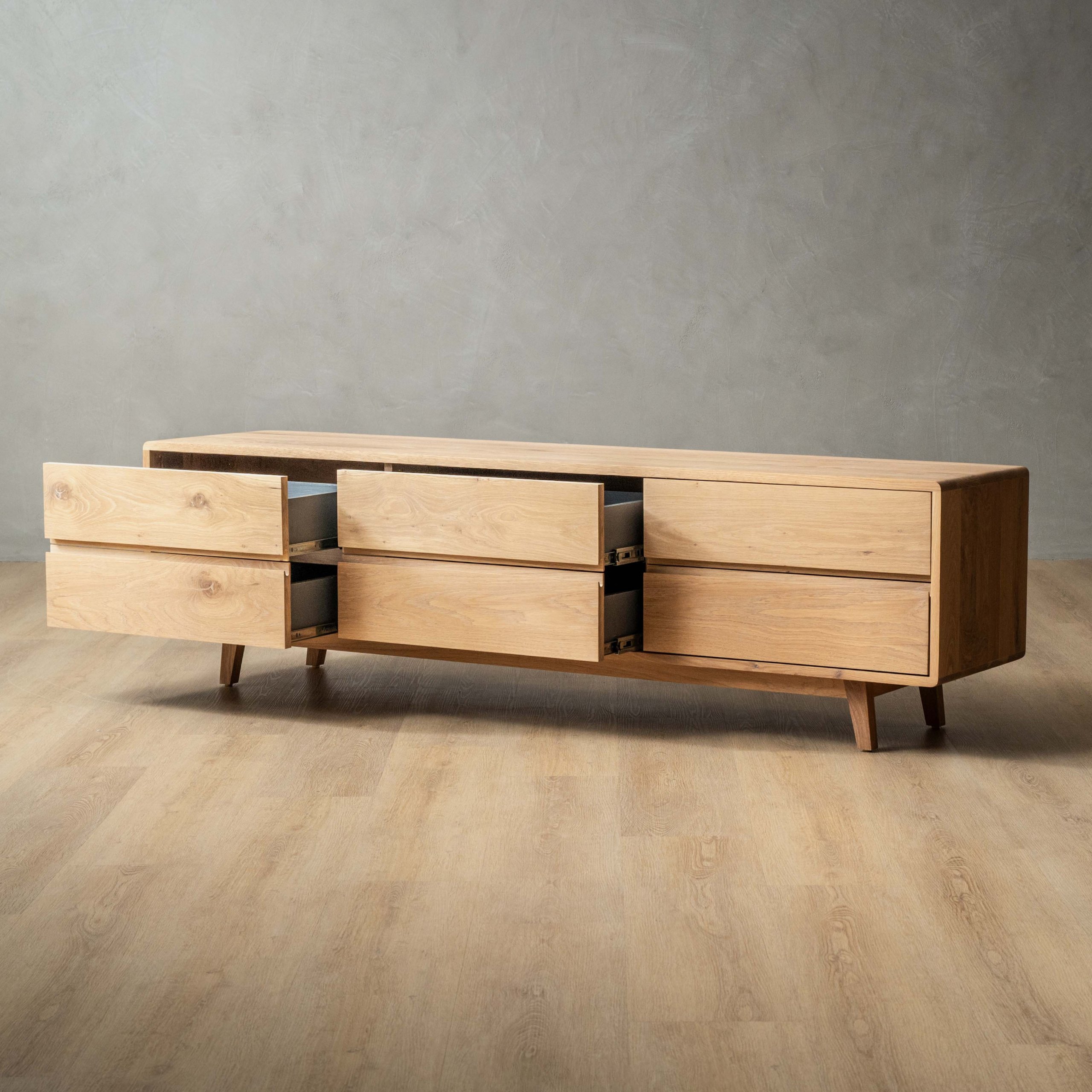
Featured: Philadelphia 6-Drawer TV Unit — Oak
The Philadelphia TV Unit is a solid wood piece with a modern design: tapered legs, clean lines, and six drawers that keep the living room organised without sacrificing character. Built from oak, it will hold its form and its finish through years of daily use — a practical anchor for any contemporary lounge.
5. The bedroom: the investment you sleep on every night
The bedroom is where solid wood furniture makes the most quietly significant difference. A well-made solid wood bed base provides structural stability that affects sleep quality directly — it does not creak, flex, or shift under weight. A solid wood chest of drawers operates smoothly, stores reliably, and looks good every morning for a decade without any effort from you.
Bedroom furniture is also often the least frequently replaced furniture in a home, which makes quality more important here, not less. Buying a solid wood bed base and matching pedestals is a decision that does not need to be revisited for twenty years if the pieces are well chosen.
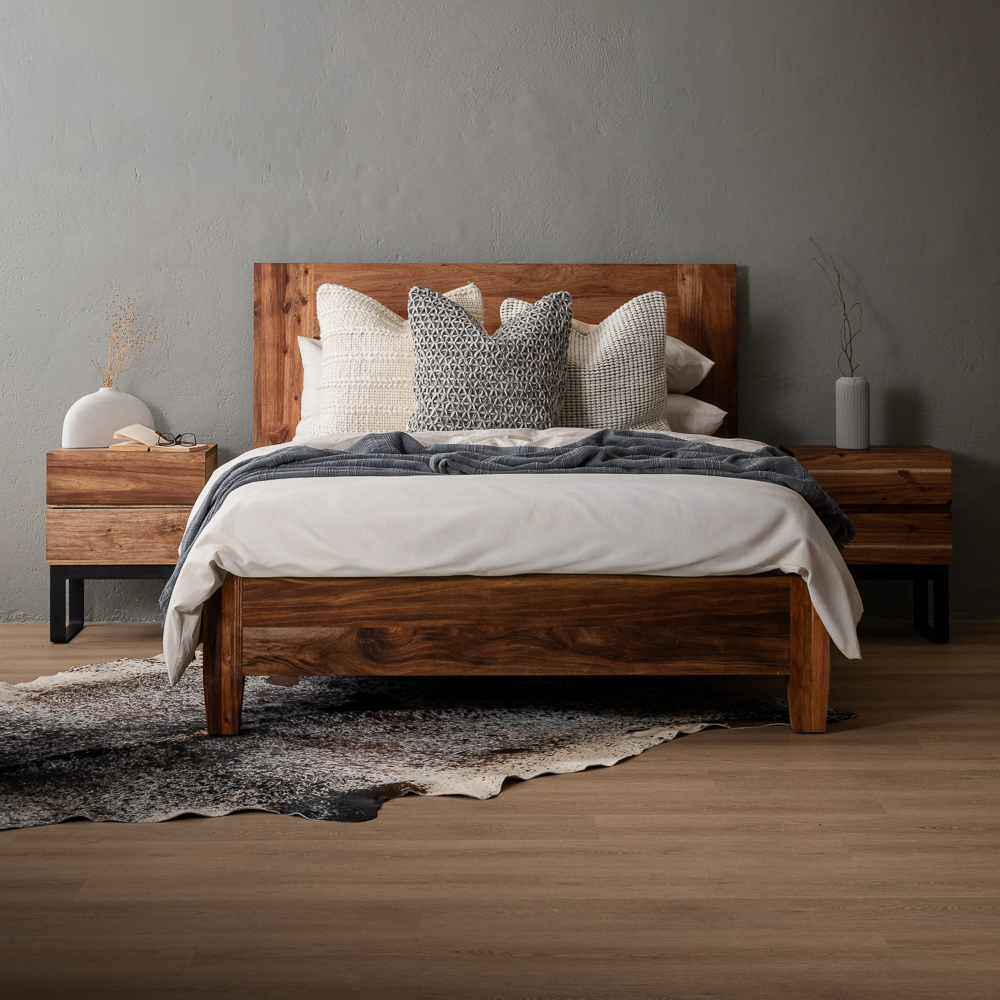
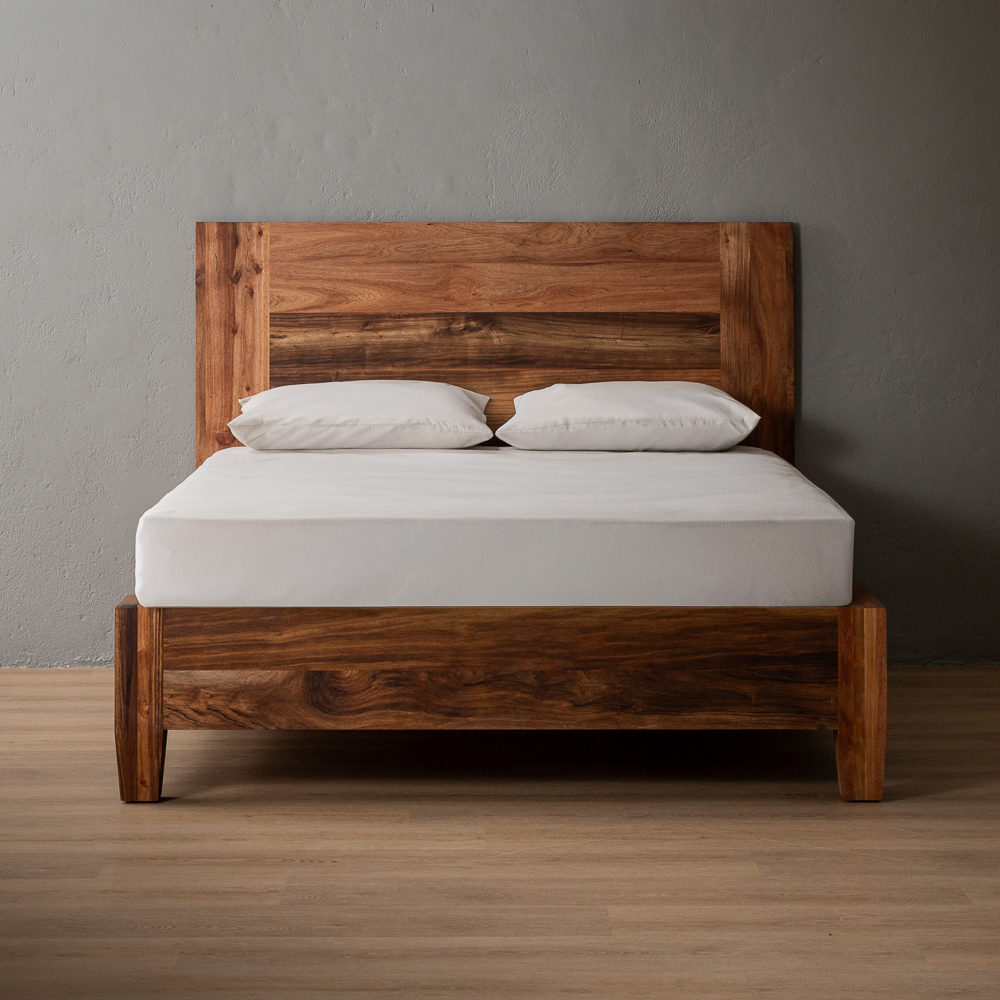
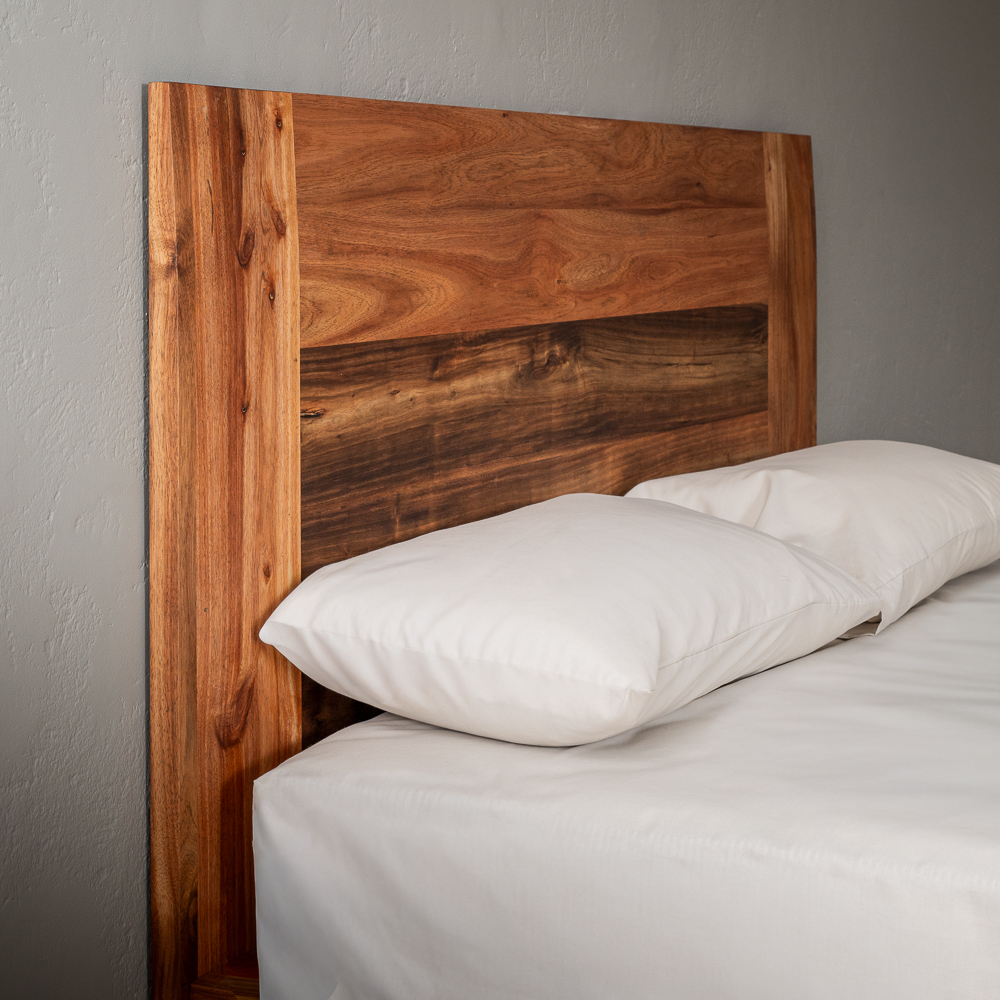
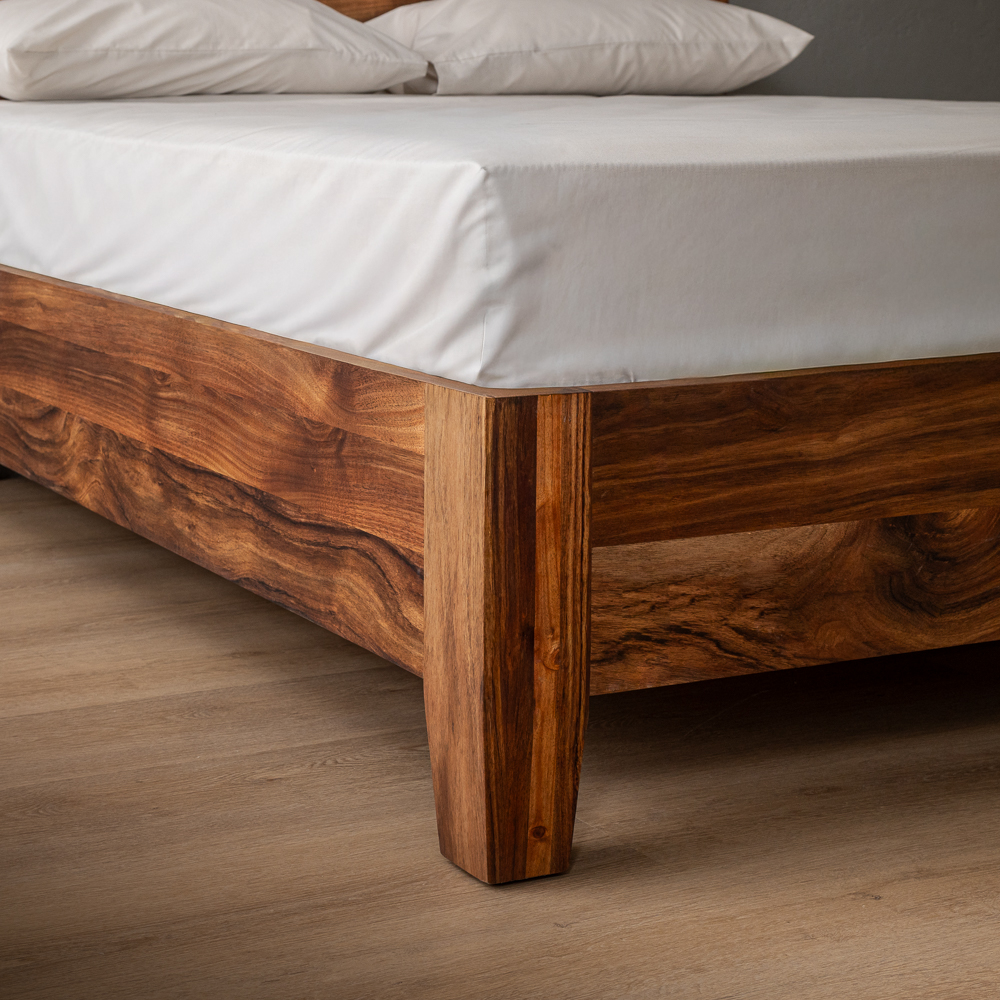
Featured: Karee Bed Base with Headboard — Blackwood
The Karee Bed Base with Headboard is built from solid wood with four thick wooden legs and a matching attached headboard. Its modern-classic design sits well in contemporary bedrooms without trying too hard. This is a bed designed for the long haul — sturdy, well-proportioned, and made to anchor a bedroom rather than just occupy it.
Featured: Swartberg Chest of Drawers — Oak
A solid wood chest of drawers in oak with powder-coated steel pulls for a clean modern finish. The Swartberg is built for daily use: two spacious drawers that continue to run smoothly year after year, in a piece that adds warmth and character to the bedroom rather than simply providing storage.
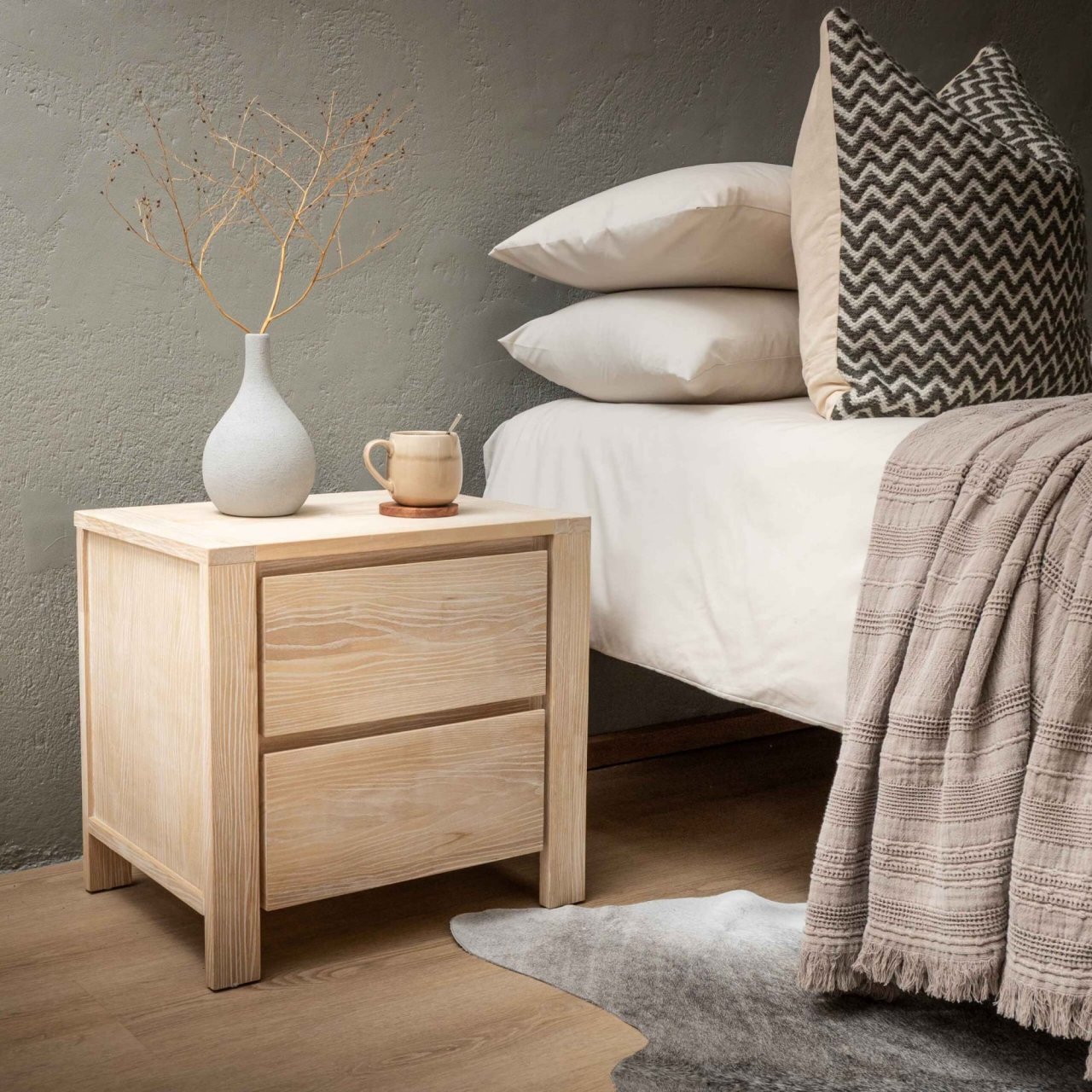
Featured: Thurncrest Pedestal
The Thurncrest Pedestal is crafted from solid wood with two spacious drawers and a warm natural finish. As a bedside companion to any solid wood bed, it brings the same material honesty to the details of the room. Small pieces like pedestals are often where compromise is easiest — and where the difference between solid wood and the alternatives is most apparent over time.
6. Solid wood and sustainability: buying less, keeping longer
The most sustainable piece of furniture is one you do not need to replace. Solid wood, when sourced responsibly and cared for correctly, has an exceptionally long life — which means fewer replacements, less waste, and a smaller footprint over the long term.
Reclaimed wood takes this further. When a piece is built from timber that has already served another purpose — flooring, beams, structural timber — it carries an inherently lower environmental cost than newly harvested wood. It is also, by its nature, already weathered and stable.
At Incanda, our commitment to this approach is reflected in pieces like the Ridgeway Collection, where reclaimed elm becomes furniture with its own history — a stone wash finish that honours the material rather than hiding it.
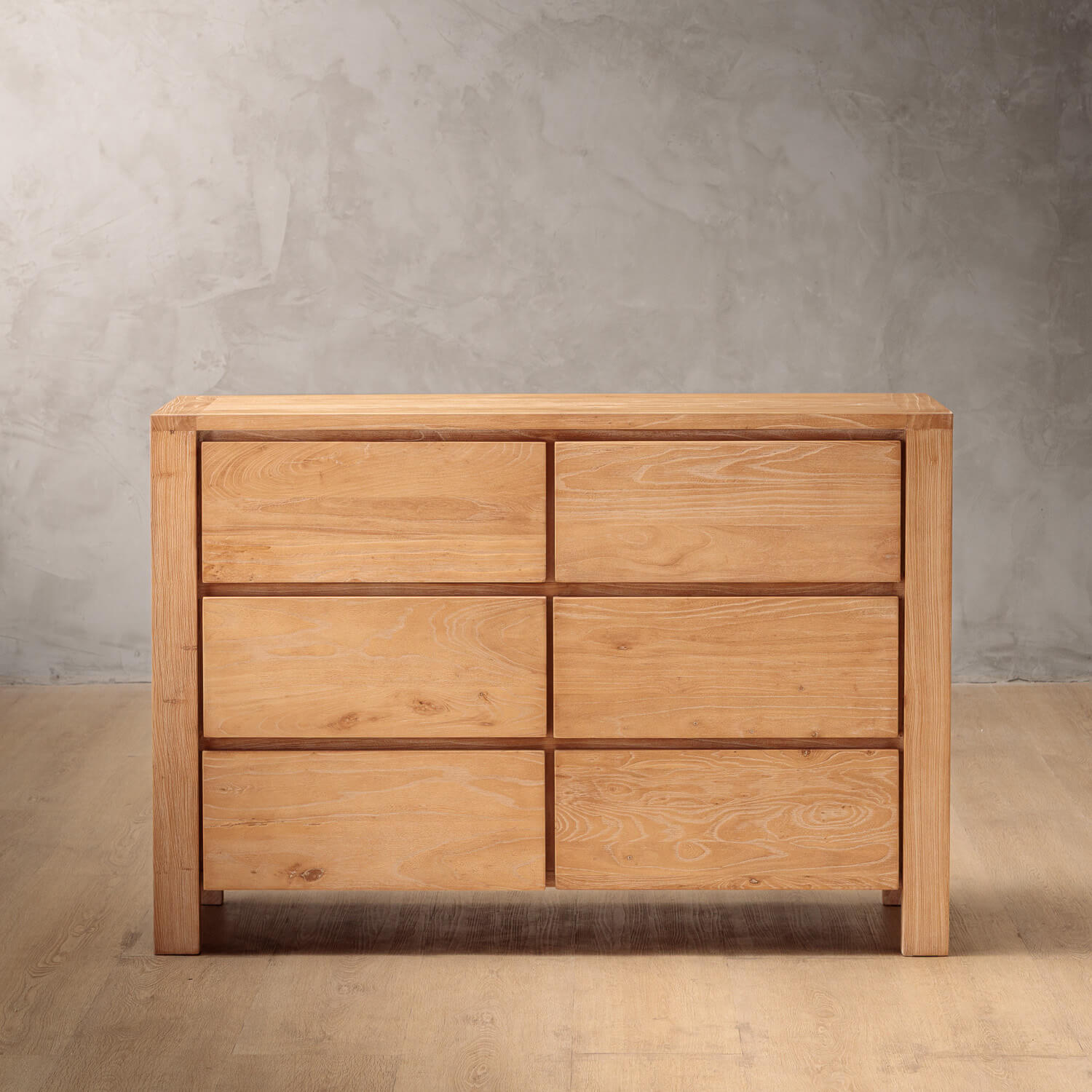
Featured: Ridgeway Chest of Drawers — Stone Wash
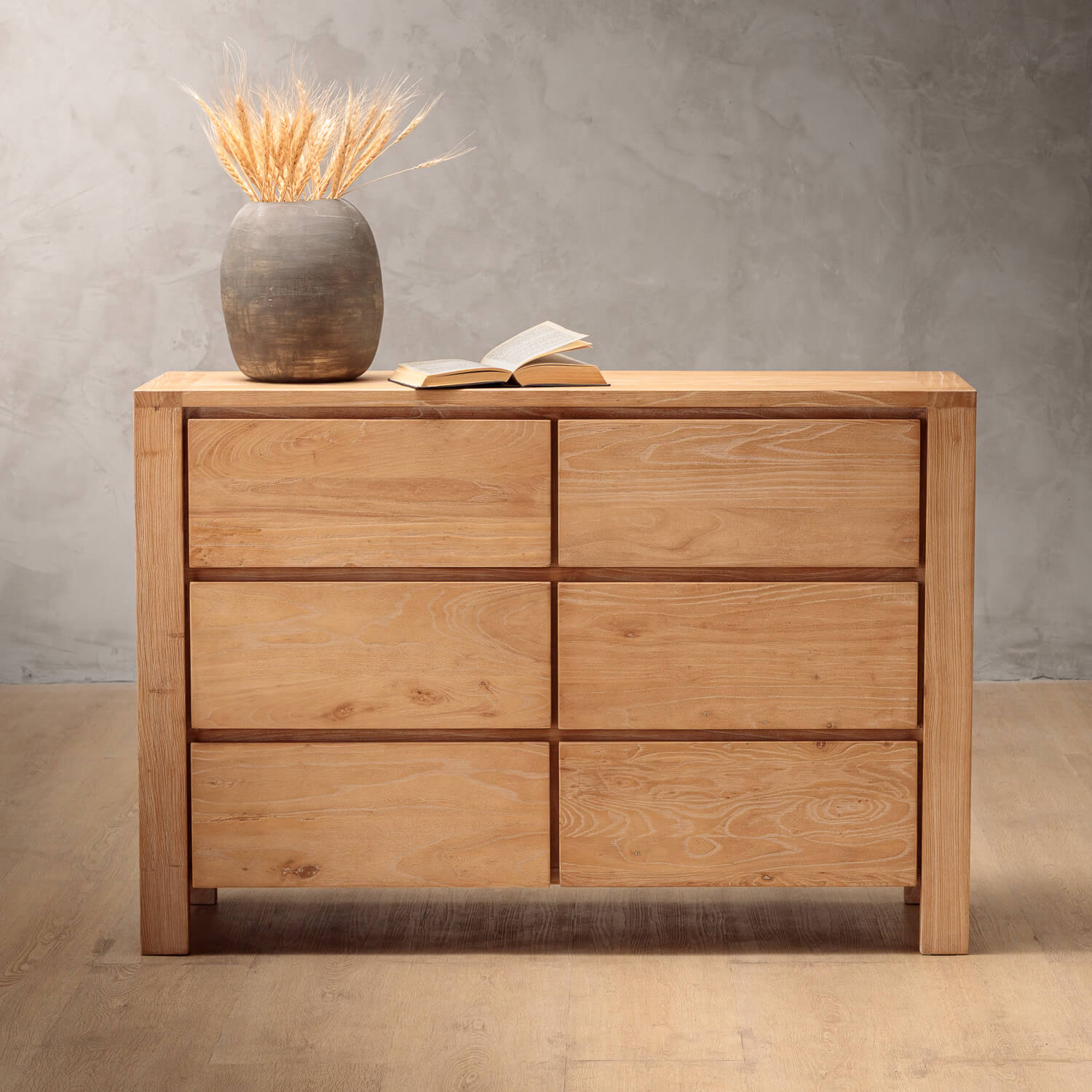
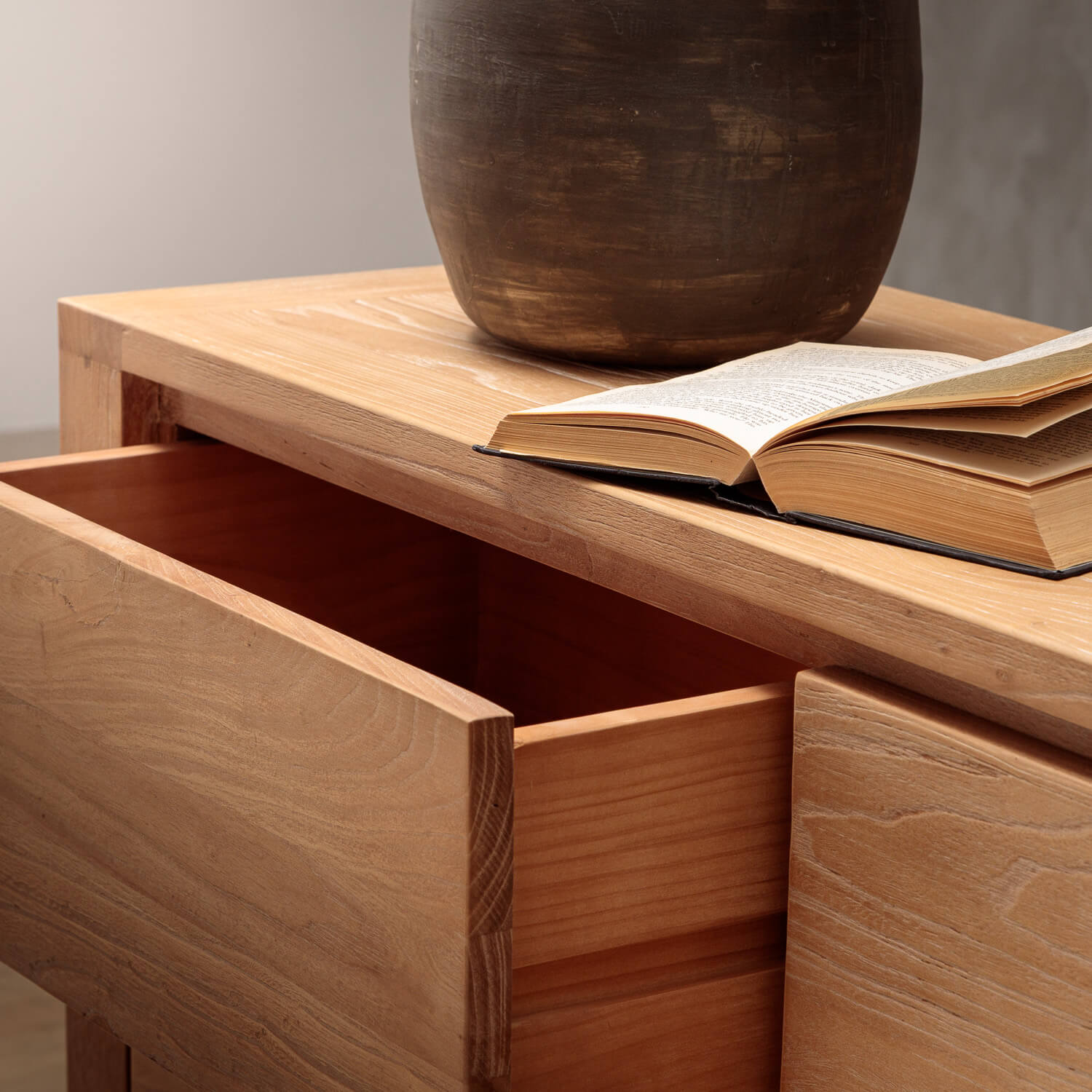
Crafted from reclaimed elm in a soft stone wash finish, the Ridgeway Chest of Drawers is furniture made with material conscience. The natural variations in tone, the grain character, and the finish are all expressions of the wood itself. Built to last, and built from wood that was already doing something useful before it arrived in your home.
7. How to care for solid wood furniture
Solid wood requires some care, but not a great deal of it. A few simple habits will keep your furniture looking right for years.
Cleaning
- Wipe with a lightly damp cloth — never saturated.
- Dry immediately after any contact with water.
- Avoid harsh chemical cleaners or abrasives.
- For general dusting, a soft dry cloth is sufficient.
Protecting the surface
- Use coasters, placemats, and trivets under hot dishes or wet glasses.
- Keep solid wood furniture out of direct prolonged sunlight where possible.
- Use furniture pads under heavy objects that remain in place.
Oiling and conditioning
- Most solid wood benefits from a light oiling once or twice a year — especially in dry Highveld conditions.
- Use a product specifically designed for wood furniture. Incanda’s wood care range is available in-store and online.
- Reclaimed wood pieces with a stone wash or vintage finish may require different care — consult the product page or ask in-store.
Dealing with scratches
- Light surface scratches can often be treated with a matching wood oil or wax.
- Deeper scratches on an untreated or lightly finished surface can be sanded out and refinished.
- This is one of the genuine advantages of solid wood: it can be restored. Veneer and board alternatives cannot.
The bottom line
Solid wood furniture costs more to buy. It costs nothing to replace, because it does not need replacing. Over any meaningful timeframe — five years, ten years, a generation — it is almost always the more economical choice. And in the meantime, it is simply better to live with.
The grain is real. The weight is honest. And the warmth it brings to a room does not fade. Browse Incanda’s solid wood furniture collection in-store or online.