How to Choose a Leather Colour That Suits Your Home

Choosing leather furniture is often easier than choosing the leather colour. The shape of a couch or armchair may suit the room immediately, but colour has to work with everything around it: timber, flooring, walls, rugs and natural light.
If you are wondering how to choose a leather colour that will still feel right years from now, start with your home rather than a trend. Browse Incanda’s leather couches and leather armchairs with the whole room in mind.
Good leather develops character as it ages. The best colour is not necessarily the one that makes the strongest first impression. It is the one that settles naturally into your space and gives you room to live with it.
Before looking at leather swatches, take stock of the fixed or expensive elements in the room. Floors, built-in cabinetry, stone, timber furniture and large rugs are usually going to stay longer than scatter cushions or paint colours.
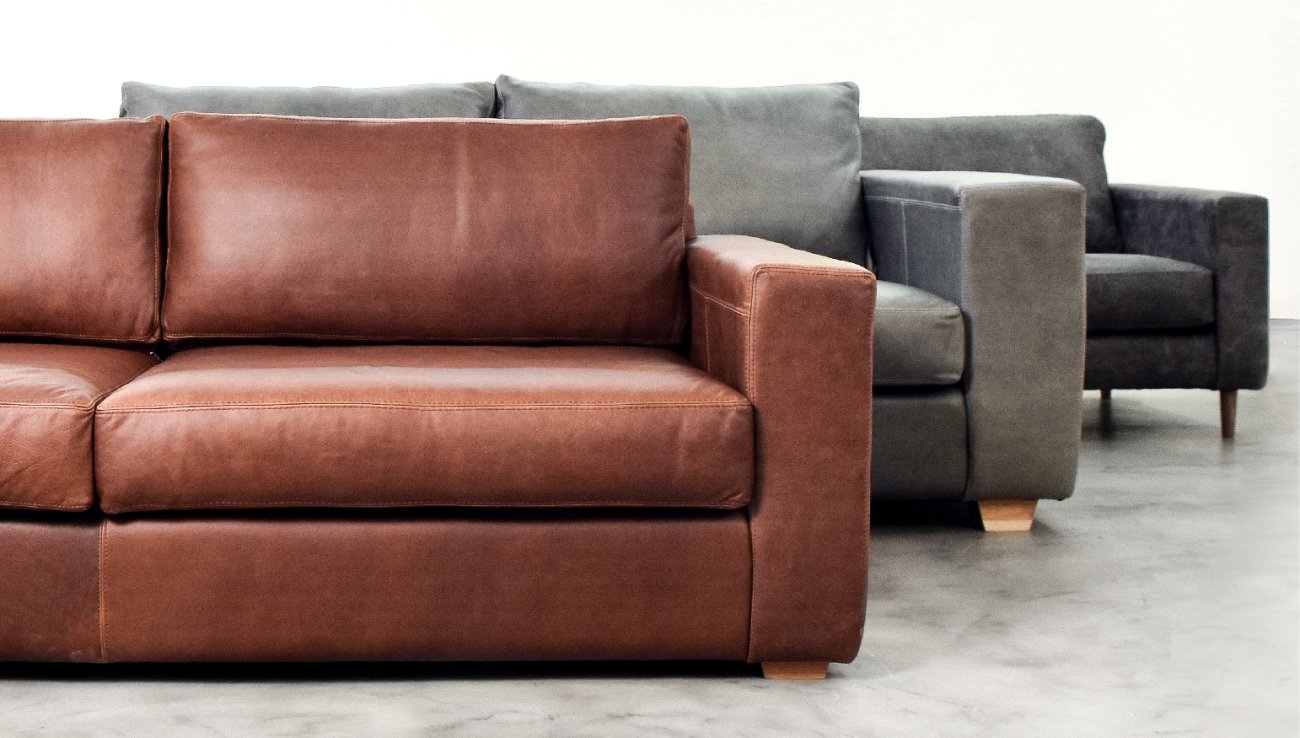
Look for the undertones that repeat across the room. Warm oak, cream walls and earthy textiles tend to sit comfortably with tan, ginger and desert leathers. Cooler greys, black metal and darker timber can carry deeper shades such as black or pepper.
A useful way to narrow your choice is to ask:
With reclaimed pieces especially, expect variation in tone and texture. Two beds from the same range will never be identical, and that is exactly what gives each one its presence. If you want uniformity, lean towards solid hardwoods. If you want soul, reclaimed is hard to beat.
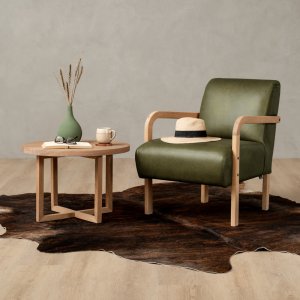
The Palmiet Leather Armchair – Oak in Olive is a good example of a colour that can bridge several materials. Its full-grain leather seat sits within a solid oak frame, so the green tone feels grounded rather than decorative. Olive works particularly well with natural timber, off-white walls, woven rugs and indoor plants.
Once you understand the room, it becomes easier to choose between warm browns, softer neutrals, earthy colours and dark leather.
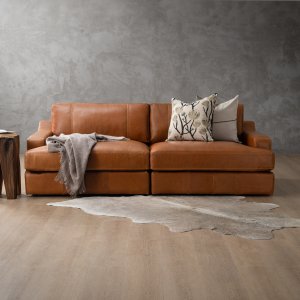
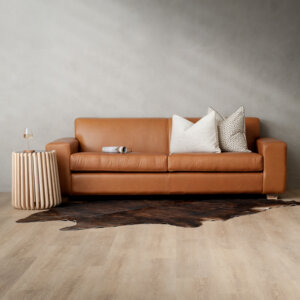
Tan remains popular for a reason. It brings warmth into a room without demanding that every other element match it. The Windermere 3-Seater Leather Couch – Tan, with its full-grain leather and generous deep seating, is a good fit for rooms with oak, cream, beige, warm grey or natural fibres.
Tan also changes character depending on what you place around it. Against pale walls it feels richer; alongside darker timber it becomes more relaxed. This makes it a practical choice if your decor changes over time.
Ginger sits a little deeper and earthier. The Karoo 3-Seater Leather Couch in Ginger brings a warmer, distinctly South African feel to a room. It pairs naturally with timber, woven textures, muted greens and the dusty colours often found in Karoo-modern interiors.
If you like a home that feels layered rather than matched, ginger gives you plenty to work with. It has enough colour to anchor the room while still behaving like a neutral.
Not every leather couch needs to be brown. Softer earth tones can be just as versatile when their undertones suit the room.
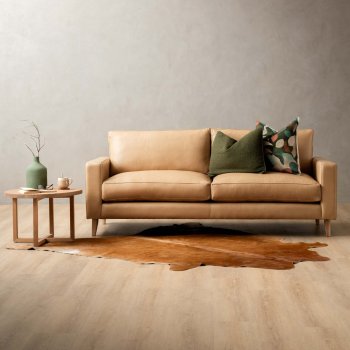
The Hamlet 3-Seater Leather Couch in Desert is a useful example. Its full-grain leather upholstery is paired with oak legs and a slim silhouette, while the Desert colour keeps the overall look light and grounded. In a smaller lounge, a softer leather tone can reduce the visual weight of a substantial piece.
Desert works especially well with chalky whites, sand, natural oak and muted textiles. If your home has plenty of natural light, it can create a calm base without becoming stark.
Olive introduces more personality. Used on a single armchair such as the Palmiet, it can connect timber furniture, greenery and neutral upholstery without making the room feel overly coordinated.
Dark leather is strongest when it is chosen deliberately. It can anchor a large open-plan room, sharpen a neutral palette or provide contrast against pale flooring and walls.
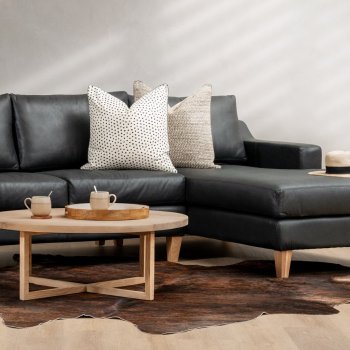
The Douglas Leather Corner Couch with Daybed Right in Mystique Black gives a larger seating piece a strong, grounded presence. The couch is upholstered in full-grain leather and includes oak legs, which helps prevent the black from feeling too severe. In a bright room, black leather can look crisp and architectural; in a darker room, it will feel more enveloping.
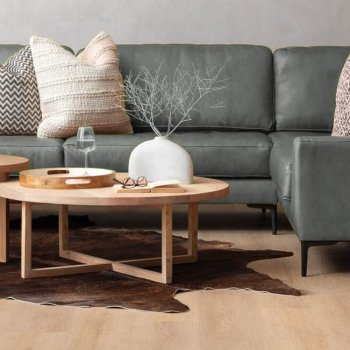
Pepper offers a gentler alternative to pure black. The Tulbagh Leather Corner Couch Right – Pepper pairs full-grain leather with slim steel feet. The Pepper shade still gives the room depth, but its cooler character makes it easy to combine with timber, stone and softer neutral fabrics.
If you are unsure about going very dark, Pepper is often the easier middle ground.
Leather colour changes throughout the day. A swatch viewed under showroom lighting can look quite different near a large window, in morning light or under warm lamps at night.
Whenever possible, compare your preferred leather colour with the room in both daylight and evening light. Look at it next to your flooring and timber furniture rather than holding it against a white wall.
Natural leather also carries variation. Full-grain hides retain characteristics that make each piece individual, and colour can show subtle differences across the surface. This is part of what gives genuine leather its depth and the ability to develop a patina over time.
Keep a few practical points in mind:
These details matter when you choose a colour. A medium tan or ginger may make everyday variation less noticeable, while black creates stronger contrast with dust and light marks. A lighter Desert tone can keep a room feeling open but may ask for more attention in a busy family space.
The right leather colour should make the rest of the room easier, not harder. You should be able to picture it with your timber, your favourite rug, the artwork you already own and the changes you may make in a few years.
Choose Tan or Ginger if you want warmth and flexibility. Look at Desert if the room needs something lighter. Olive works well when you want an earthy point of difference. Pepper offers depth without the severity of black, while Mystique Black gives a room a confident anchor.
Most importantly, choose the leather in the context of your own home. Full-grain leather is made to be lived with, and its colour will become more interesting as the material develops character. Take your time, compare the tones you already have, and choose the one you will be happy to settle into for years to come.
Browse Incanda’s leather couch collection to find the colour that calls out to you.
Comments are closed
© Copyright 2026 Incanda Furniture a division of Wheco Group | All Rights Reserved.
© Copyright 2026 Incanda Furniture a division of Wheco Group | All Rights Reserved.