
Dining Chairs and Benches: How to Mix Seating Around Your Table
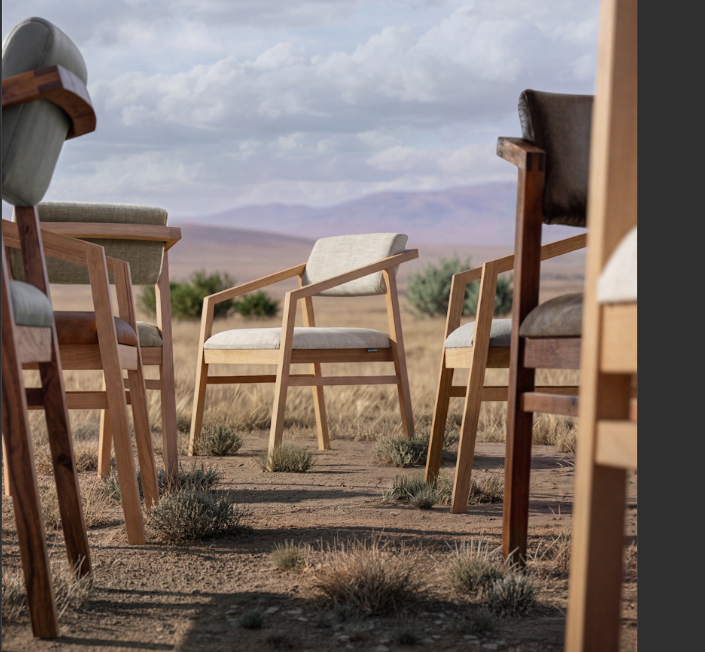
A dining table is only ever half the story. The seating is what decides whether a room feels formal or relaxed, open or closed off, and whether people want to linger once the meal is done. Choosing between dining chairs and benches, and knowing when to mix the two, is one of the simplest ways to shape how your dining room feels.
Explore our handcrafted dining chairs and benches, then read on for how to bring them together around your table.
Chairs or Benches? Start With How You Live
There is no single right answer here. The best choice depends on your space, your household and the way you like to gather. It helps to think about how each option behaves day to day:
Dining chairs give everyone a defined seat, a supportive back and a little personal space. They suit more formal rooms, longer sits and smaller households.
Benches seat more people in less space, slide neatly under the table when they are not in use, and bring an easy, sociable feel. They are a natural fit for busy family tables, children, and open-plan rooms.
Most homes land somewhere in between, which is exactly where mixing the two comes in. Before you decide, it is worth working out how many seats you actually need.
How Much Seating Do You Need?
A comfortable place setting needs roughly 60cm of table width per person, so a 1.8m table seats about three a side, and a 2.0m table seats three comfortably with room to spare. Benches follow the same rule, which is why their length matters: a longer bench simply means more people shoulder to shoulder. Leave a little breathing room at the ends for carver chairs, and always check that your chosen seat slides fully under the table when it is not in use.
The Case for Dining Chairs
A good dining chair earns its place every day. It should be comfortable enough to sit through a long Sunday lunch and built to take years of daily use. The pleasure of a handcrafted chair is in the detail, the grain of the frame, the give of the seat, the way leather softens with time.
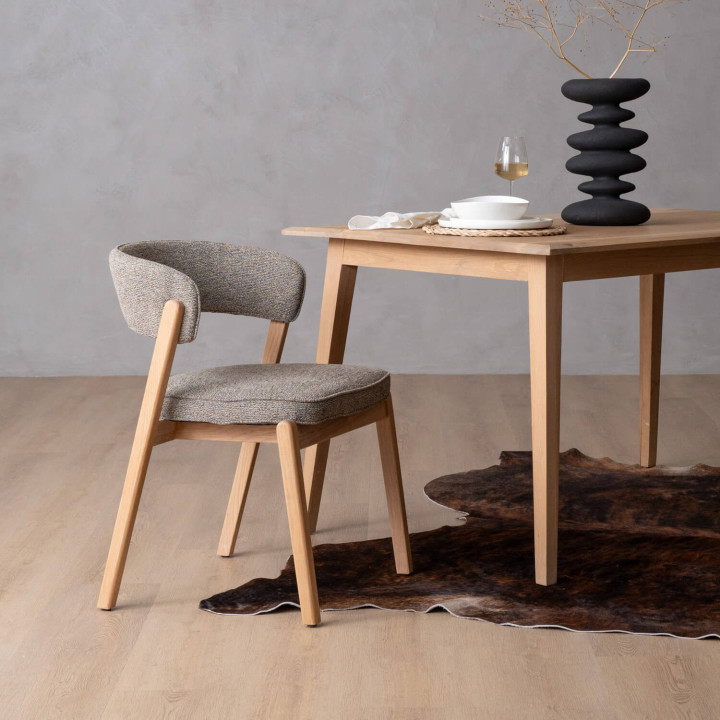
For a softer, upholstered look, the Lucian Fabric Dining Chair in fossil sets a gently curved, upholstered back on natural solid oak legs. It’s calm, neutral and easy to live with.
 | 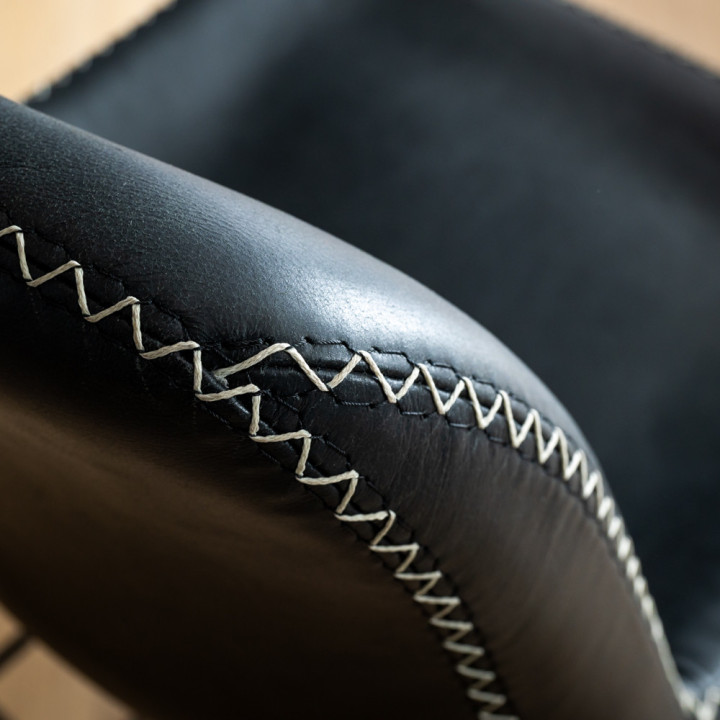 |
If you prefer the honest character of leather, the Hand-stitched Leather Dining Chair in black is wrapped in full-grain leather and finished with contrast hand-stitching around the edge, set on a slim black steel frame.
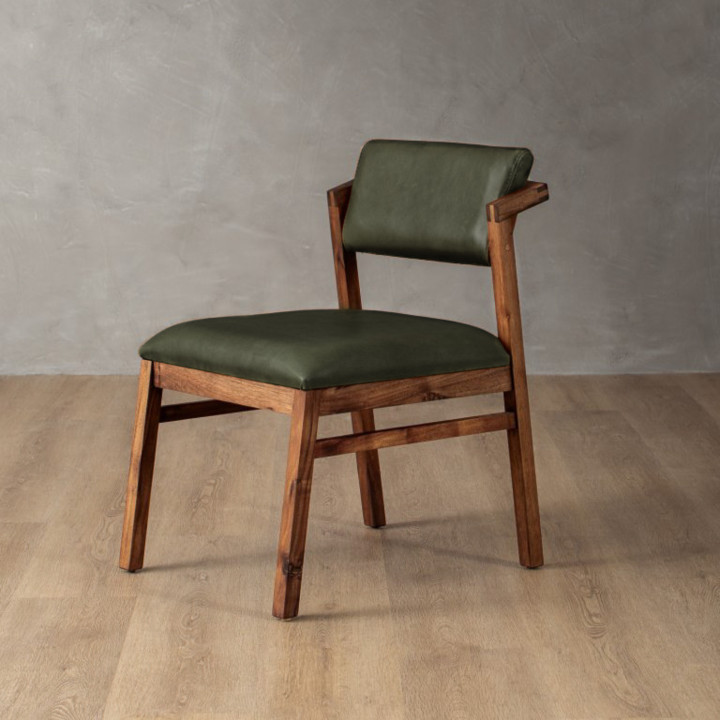
The Jozi Leather Dining Chair in blackwood and olive pairs a solid blackwood frame with a full-grain leather seat and back in a warm olive.
 |  |
Carver Chairs vs Dining Chairs
When you plan an arrangement, it helps to know the difference between a carver and a standard dining chair. Carver chairs are the ones with armrests, traditionally placed at the head and foot of the table:
Dining chairs have no arms. They make up the sides of the table, tuck in close, and let you fit more seats along its length.
Carver chairs have arms. They anchor the ends, carry a little more presence, and give whoever sits there a touch more room.
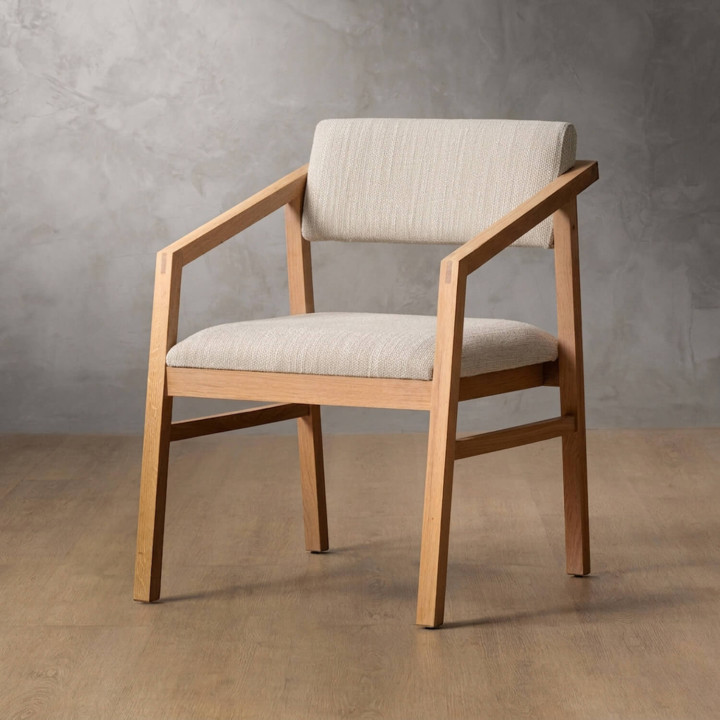
A classic approach is to run matching dining chairs down the sides and place a carver at each end. The Jozi Fabric Carver Chair in oak and sea sand does exactly this, with gently framed arms and a soft, sea-sand upholstered seat on a solid oak frame.
Because it comes from the same Jozi range as the leather dining chair above, the two share a family resemblance even in different materials, one in leather, one in upholstery, a simple way to mix textures without the table looking mismatched.
The Case for Benches
A bench changes the whole feeling of a table. It is relaxed, generous and endlessly flexible, pull it out for a crowd, push it back when it is just the two of you. Children love them, and they make a small room feel more open because there is less visual clutter around the table.
Length is the thing to get right. The 1.5m Fira Bench in reclaimed elm with a vintage finish suits a smaller table or a spot along the wall, with its bold, linear block raised on slim black steel legs.
The 2.0m Drakenstein Dining Bench stretches out in solid rubberwood with a soft, ash-grey brushed finish that shows off the grain, while the 2.0m Griekwa Bench offers the same generous length in solid oak, a classic trestle shape made to pair with its matching dining table.
For something with genuine South African soul, the 1.8m Riempie Bench in oak and black carries a handwoven seat of braided full-grain leather set on a solid oak frame.
One small thing to check with any bench is height. Aim for roughly 30cm between the top of the bench and the underside of the table, the same clearance you would want from a chair, so no one feels cramped once they sit down.
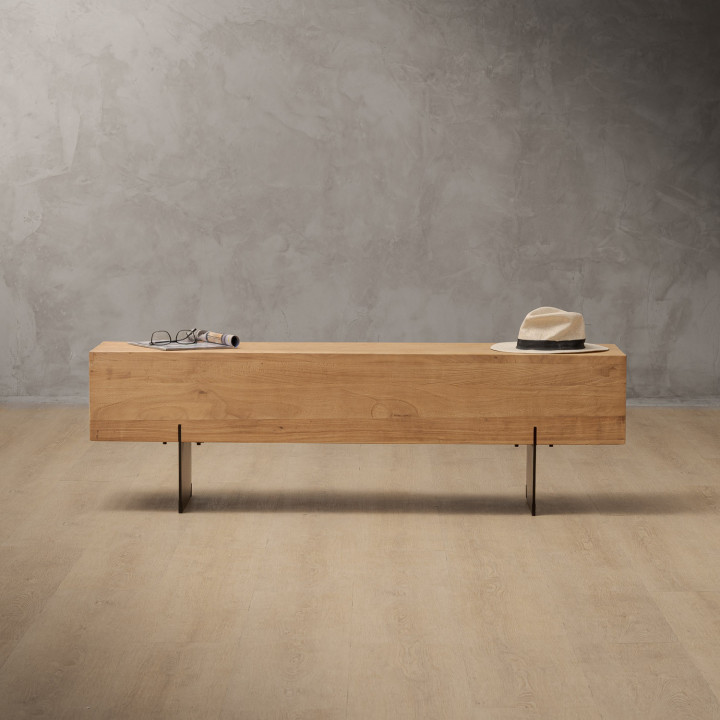 Fira | 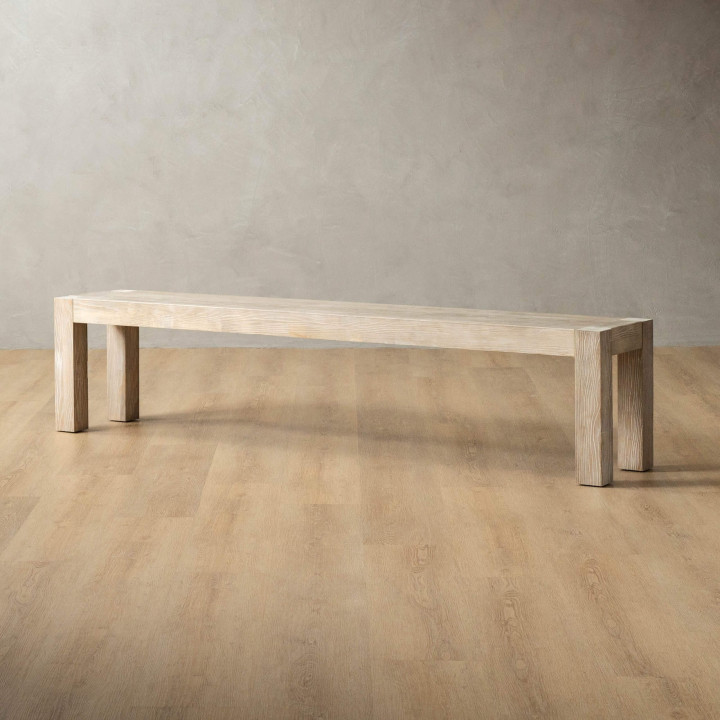 Drakenstein | 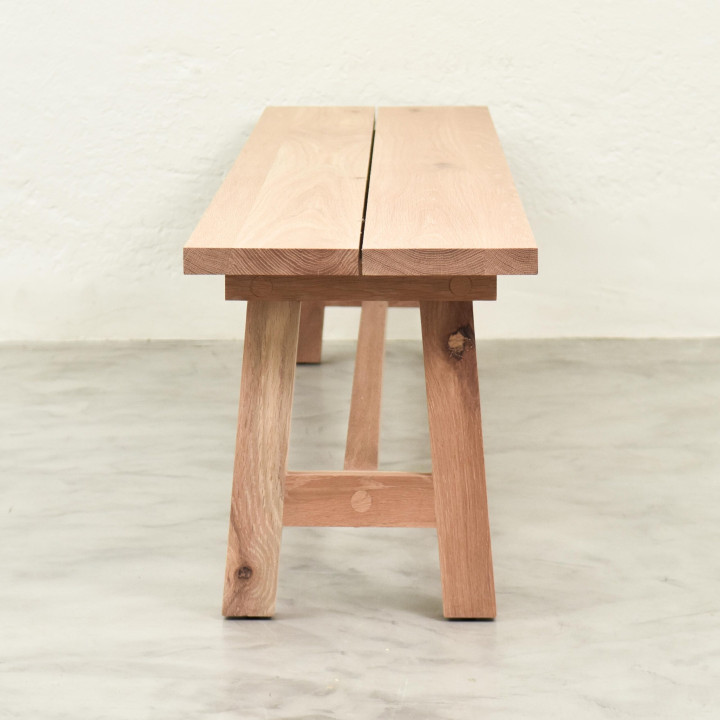 Griekwa | 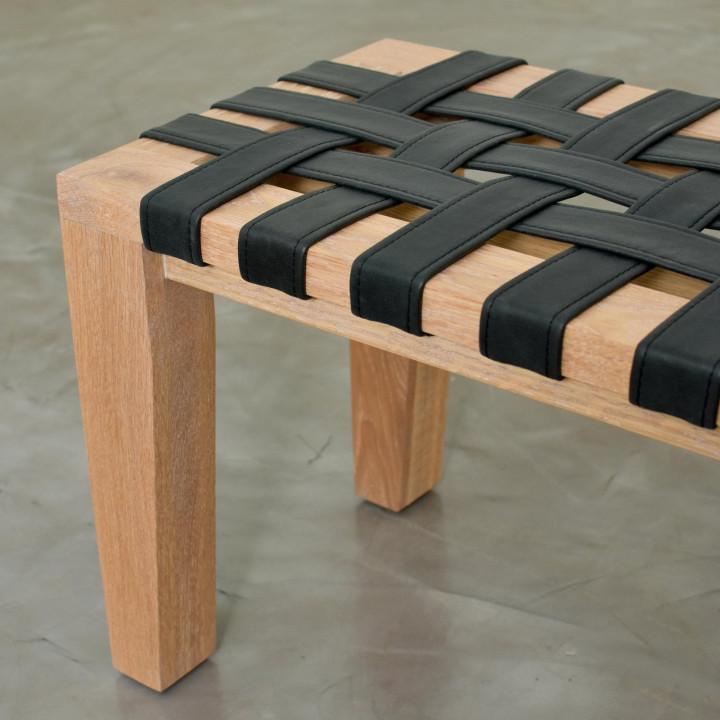 Riempie |
Mixing Chairs and Benches
You do not have to choose one or the other. Some of the most inviting dining rooms use both, and the mix is what gives them character:
Bench on one side, chairs on the other. The bench keeps things sociable and space-saving, while the chairs keep things comfortable for those who want a back to lean on.
Carvers at the ends. Anchor the head and foot of the table with carver chairs for a little structure and a sense of occasion.
Mix materials with intention. A leather chair, a fabric carver and a timber bench can all sit together, as long as the tones stay in the same warm, natural family.
The result is a table that feels curated rather than matched, and far more like a home than a showroom. Start with the pieces you love most, then build the rest of the setting around them.
Whichever way you go, let comfort and craft lead the decision rather than the rule book. A bench that invites the kids to pile in, a carver that gives a guest the best seat, a leather chair that softens a little more each year, these are the details that turn a dining room into the room everyone gathers in.
At Incanda, you can take home pieces made by hand from honest materials like solid wood, full-grain leather and reclaimed timber, and they will serve your family for years to come.